

Kitchen Worktop Guides: Materials, Costs & Care
Choosing a kitchen worktop involves more than picking a colour. The material needs to suit the way you cook, the look of your kitchen, your maintenance preferences and your budget. These kitchen worktop guides from Stone Cut bring together practical comparisons and advice on quartz, granite, marble and porcelain, so you can understand the options before planning a bespoke worktop.
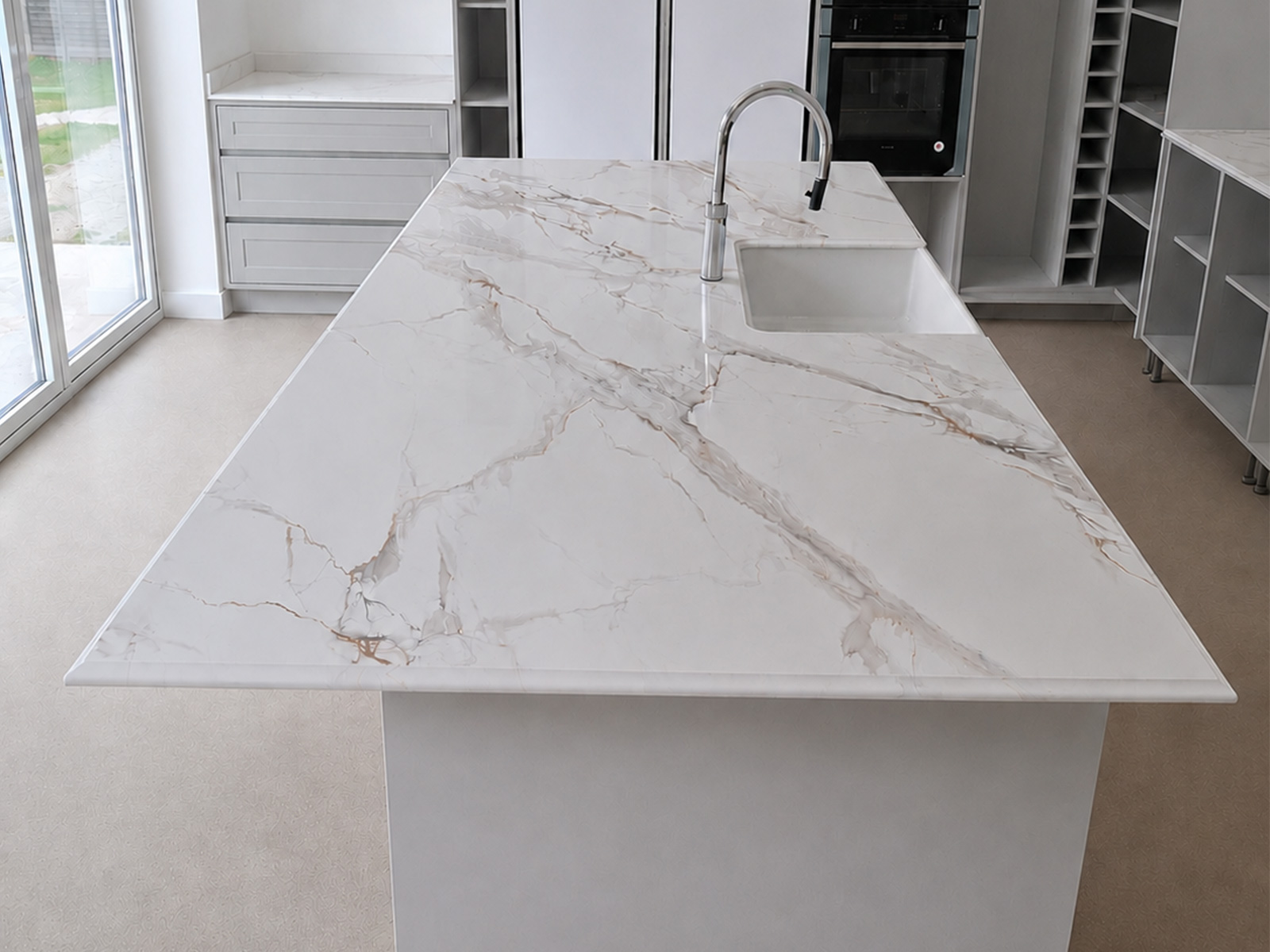
Stone Cut is a Southall-based worktop specialist supplying, templating, fabricating and fitting stone surfaces for kitchens and bathrooms across London and surrounding areas. The advice here explains the main decision points; the exact performance and care requirements always depend on the selected product and its manufacturer’s technical guidance.
Start Here: Choosing the Right Kitchen Worktop
If you are at the beginning of your project, start with these guides. They cover the questions most people need to answer first: which material suits their lifestyle, how the options compare and what durability means in everyday use.

How to Choose a Kitchen Worktop
Compare appearance, durability, cleaning and budget before narrowing down your material choice. Read the 10 practical selection tips.
Quartz vs Granite
Understand the differences between engineered quartz and natural granite, including pattern variation, heat, maintenance and sealing. Compare quartz and granite worktops.
Which Worktop Is Most Durable?
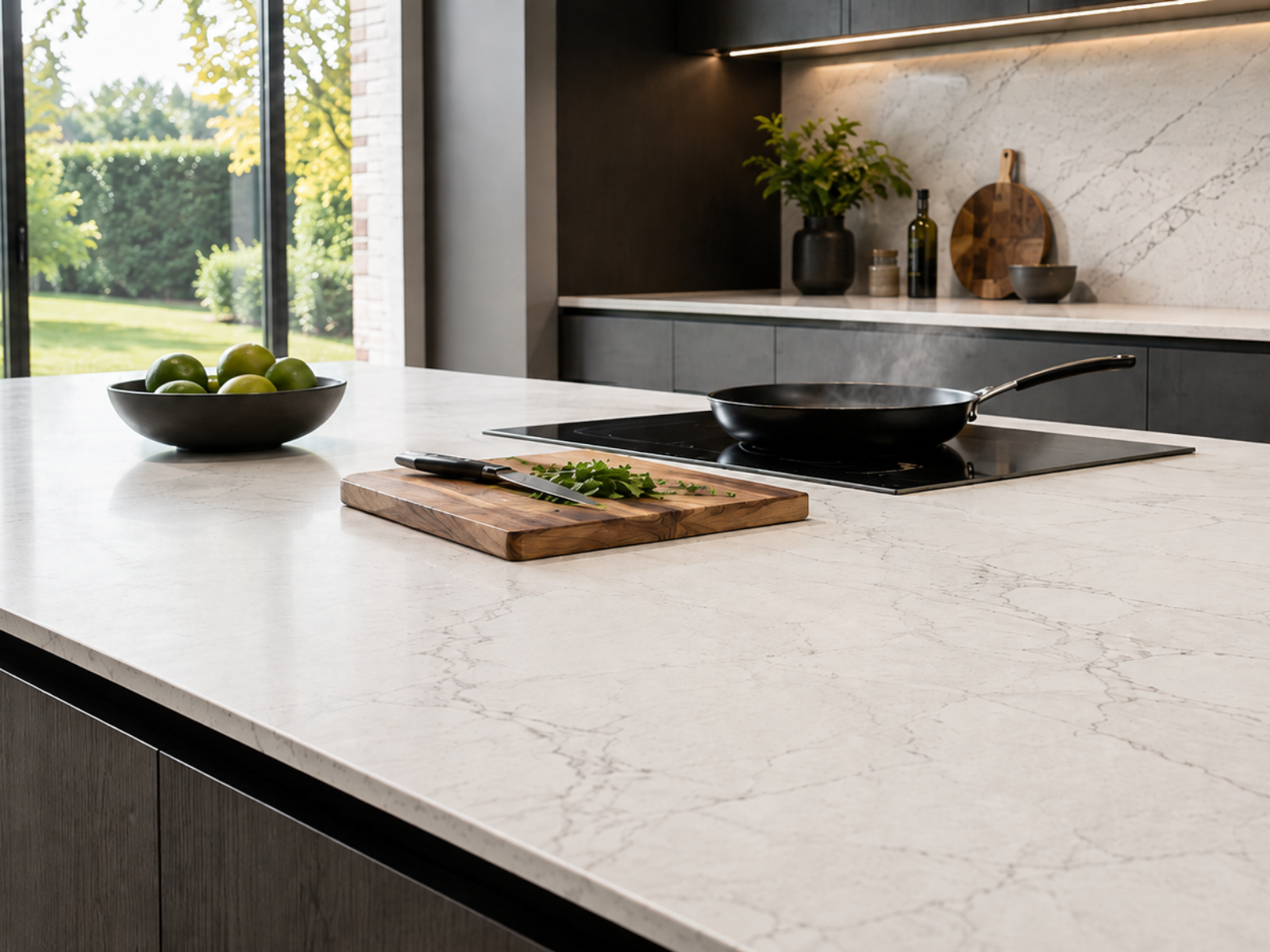
Durability depends on more than hardness. Consider heat, impact, scratches, stains and how the kitchen is used. Explore the durable worktop comparison.
Quartz Kitchen Worktop Guides, Benefits & Design Ideas
Quartz is an engineered surface available in a wide range of colours, finishes and marble-inspired designs. Its consistent appearance and straightforward day-to-day care make it a popular option, but it is not indestructible. Heat protection, suitable cleaning products and professional fabrication remain important. Read why choose quartz worktops for an overview of the material, explore the advantages of bespoke quartz worktops, and learn whether quartz can be used as a matching splashback. For a wider comparison, see quartz vs marble vs granite worktops.
Browse Stone Cut’s quartz colours and collections or visit the dedicated quartz worktops in London page for information about bespoke supply, templating, fabrication and fitting.
Compare Kitchen Worktop Materials
Quartz, granite, marble, porcelain and laminate are not interchangeable. Their composition affects how they look, how they respond to heat and stains, and how much care they need. Use this overview as a starting point, then open the detailed comparisons for the material you are considering.
| Material | What to know | Care considerations |
|---|---|---|
| Quartz | Engineered surface with a broad choice of consistent colours and patterns. | Usually does not need sealing; protect from direct heat and follow the brand’s cleaning advice. |
| Granite | Natural stone with individual mineral patterns and variation between slabs. | Sealing requirements depend on the stone; use suitable cleaners and confirm care guidance. |
| Marble | Natural stone prized for distinctive veining and a classic appearance. | Can etch when exposed to acids; sealing and prompt spill care are important. |
| Porcelain | Manufactured surface available in stone-inspired designs and different finishes. | Good heat and stain performance for many products, but edges can be vulnerable to impact. |
| Laminate | Decorative surface with a wide choice of styles and a lower entry cost. | Protect joints and edges from standing water and avoid direct contact with hot cookware. |
For more detailed comparisons, read stone worktops vs laminate, marble vs granite, quartz marble effect vs real marble and porcelain vs Corian.
You can also browse the main quartz, granite, marble and porcelain worktop collections to see the materials Stone Cut supplies.
Details comparisions of Kitchen Worktops Materials
The right kitchen worktop depends on how you cook, the look you want, your maintenance preferences and the project budget. Engineered quartz, natural granite and marble, porcelain and laminate each have different strengths. These comparisons explain the differences without assuming that one material is right for every home.
Stone Worktops vs Laminate — compare initial cost, appearance, durability and the overall ownership considerations.
Marble vs Granite Kitchen Worktops — understand the differences in natural pattern, porosity, care and everyday use.
Quartz Marble Effect vs Real Marble — compare the controlled veining of engineered quartz with the natural variation of marble.
Porcelain vs Corian — review the differences between these two manufactured surface options.
For a closer look at the materials Stone Cut supplies, visit the kitchen worktops overview and explore the dedicated granite, marble and porcelain pages.
Worktop Prices & Costs
The cost of a bespoke kitchen worktop depends on the selected slab and the work needed to turn it into a finished installation. A useful quotation should make clear what is included rather than presenting a material-only figure as the complete project price.
- Material, brand, colour and slab availability.
- The measured surface area, layout and amount of material required.
- Slab thickness, finish and any special handling requirements.
- Edge profiles, upstands, splashbacks and waterfall panels.
- Sink, tap and hob cut-outs, drainer grooves, joints and polishing.
- Templating, fabrication, delivery, access and installation.
For material-specific information, read the granite worktop cost guide and marble worktop price guide. For porcelain, browse the porcelain range. You can also read this independent planning guide to the costs involved when replacing an existing kitchen worktop; it is an informational article, not a service Stone Cut offers. Quartz and Dekton prices should be confirmed against the chosen product, measurements and specification.
When comparing quotes, check whether VAT, templating, fabrication, cut-outs, delivery and fitting are included. Two prices are only comparable when they cover the same scope and specification.
Bathroom Stone Surfaces
Bathroom vanity tops and countertops need careful planning around basins, tap holes, joints, edges and water exposure. Choose a surface that is approved for the intended application, and ask how it should be cleaned and maintained. A kitchen worktop specification should not automatically be assumed suitable for every wet-area use.
Read marble or granite for bathroom surfaces, quartz stone for bathroom countertops and marble vs quartz for bathroom surfaces. You can also explore Stone Cut’s bathroom worktop services.
Worktop Care, Heat Resistance & Maintenance
Good maintenance starts with knowing what your particular surface is made from. Use a soft cloth and a cleaner approved for the material, wipe spills promptly and avoid harsh or abrasive products unless the manufacturer confirms they are suitable.
- Quartz: use chopping boards and trivets. Quartz is not completely scratch-proof or heat-proof, and strong chemicals can damage some finishes.
- Granite: sealing needs vary by stone and finish. Ask whether your selected slab requires an impregnating sealer and how often it should be checked.
- Marble: acidic liquids such as lemon juice and vinegar can etch the surface. Wipe spills quickly and use a cleaner formulated for natural stone.
- Porcelain: many products offer strong resistance to heat and staining, but sharp impacts can chip edges or corners. Take care around cut-outs and exposed edges.
For quartz-specific advice, read whether quartz is stain and scratch resistant, explore the benefits and limitations of quartz worktops and consider matching quartz splashbacks. Always follow the care sheet supplied for your exact brand and finish.
Thickness, Edge Profiles & Waterfall Islands
20 mm vs 30 mm worktops
A 20 mm or 30 mm slab changes the visual weight of a worktop and may affect material use, handling, support and cost. The suitable thickness depends on the chosen stone, slab format, cabinet construction, overhang and the manufacturer’s guidance. Some designs can use a built-up edge to create the appearance of a thicker worktop, but the fabrication detail should be agreed before templating.
Choosing an edge profile
The edge is one of the details you see and touch every day. A simple pencil or eased edge creates a clean contemporary finish, while more decorative profiles give a different character. The available profiles depend on the material thickness and fabrication requirements. Browse the Stone Cut edge profile options before finalising your design.
Planning a waterfall island
A waterfall island carries the worktop material down the side panel to the floor, creating a continuous visual feature. It needs accurate templating, careful slab selection and planning for vein direction, joints, floor clearance and cabinet support. See this Calacatta Golden quartz kitchen with a waterfall island for a real project example.
How Stone Cut’s Worktop Process Works
A successful installation depends on accurate information at every stage. Stone Cut’s process covers the key steps from measuring the finished layout to preparing and fitting the fabricated stone.
1. Templating
The worktop layout is measured so cut-outs, joints, edges and dimensions can be planned. Read about Stone Cut templating.
2. Fabrication
The selected slab is cut and finished to the agreed specification, including relevant cut-outs and edge details. Explore stone worktop fabrication.
3. Fitting
The finished pieces are positioned and installed, with joints and finishing details checked on site. Learn about worktop fitting.
The time required varies with the material, slab availability, kitchen readiness, complexity, access and fabrication schedule. Confirm the expected dates with Stone Cut when your specification and measurements are discussed; avoid relying on a generic installation-time estimate.
Commercial Stone Surfaces
Commercial projects can have different demands from a domestic kitchen, including heavier use, cleaning routines, design consistency and project coordination. Porcelain may be worth considering for some commercial interiors, but suitability depends on the product specification, detailing and intended use. Read why porcelain may be chosen for commercial stone surfaces and discuss the application with the supplier before specifying it.
Worktop Prices & Commercial Applications
A worktop quotation is shaped by more than the material name. Slab choice, total dimensions, layout, thickness, edge profile, cut-outs, joints, access, templating and installation requirements can all affect the final price. For a meaningful comparison, use a like-for-like specification and confirm what is included in each quotation.
Kitchen Worktop Replacement Cost UK — understand the main cost factors when replacing an existing kitchen surface.
Why Choose Porcelain for Commercial Stone Surfaces? — explore considerations for specifying porcelain in commercial interiors.
For a project-specific estimate, Stone Cut can discuss material options and the practical details of your layout. Read about our templating, fabrication and fitting process before you contact the team for a quotation.
Explore Quartz Brands & Other Stone Collections
Quartz manufacturers offer different colour palettes, veining, finishes and technical specifications. Use these collection pages to browse designs, then confirm current availability, slab dimensions, finish and suitability with Stone Cut before making a selection.
- Palmyra Stones — explore the Palmyra quartz collection.
- Cambria — browse Cambria surface designs.
- Cimstone — view Cimstone quartz options.
- Compac — explore the Compac collection.
- Lunastone — browse Lunastone quartz designs.
For a separate category of surface finishes, see the Stone Cut tiles collection. Tiles are listed separately from quartz brands because they are a different product category.
Frequently Asked Questions About Kitchen Worktops
How do I choose the best kitchen worktop material?
Start with how you use the kitchen, then compare appearance, heat and stain resistance, maintenance, budget and the design details you want. Quartz, granite, marble and porcelain each have different advantages and limitations, so the best choice depends on your priorities.
How much do kitchen worktops cost in the UK?
There is no single price that applies to every kitchen. Material, slab choice, dimensions, thickness, cut-outs, edge details, templating, fabrication, delivery and fitting all affect the quotation. Ask for a measured quote that lists what is included.
Is quartz better than granite?
Neither is best for every project. Quartz offers consistent engineered patterns and usually does not need sealing, while granite is natural stone with individual variation and generally stronger heat tolerance. Both need sensible care and protection from impact.
Do granite worktops need sealing?
Some granite slabs benefit from an impregnating sealer, while the requirement and resealing interval depend on the stone’s porosity, finish and use. Confirm the recommendation for the actual slab with the supplier.
How long does worktop templating and fitting take?
The schedule varies with material availability, the complexity of the layout, fabrication requirements, site access and whether cabinets are ready. Stone Cut can confirm the expected programme once the project details are known.
Can I have a waterfall edge or a matching splashback?
Often, yes, subject to the selected material, slab dimensions, pattern direction and fabrication requirements. Discuss the design early so the slab can be planned for the island panels, splashback, joints and visible edges.
Why Speak to Stone Cut?
Stone Cut is based in Southall, West London, and provides bespoke stone worktop supply, templating, fabrication and fitting for kitchens and bathrooms across London and surrounding areas. You can learn more about the company on the About Stone Cut page and check the areas we cover.
This guide was prepared by Stone Cut as a practical starting point for comparing worktop materials and planning a project. Last updated: 25 November 2026. Product performance, care and warranty terms vary by manufacturer, so always check the technical information for the exact surface selected.


