

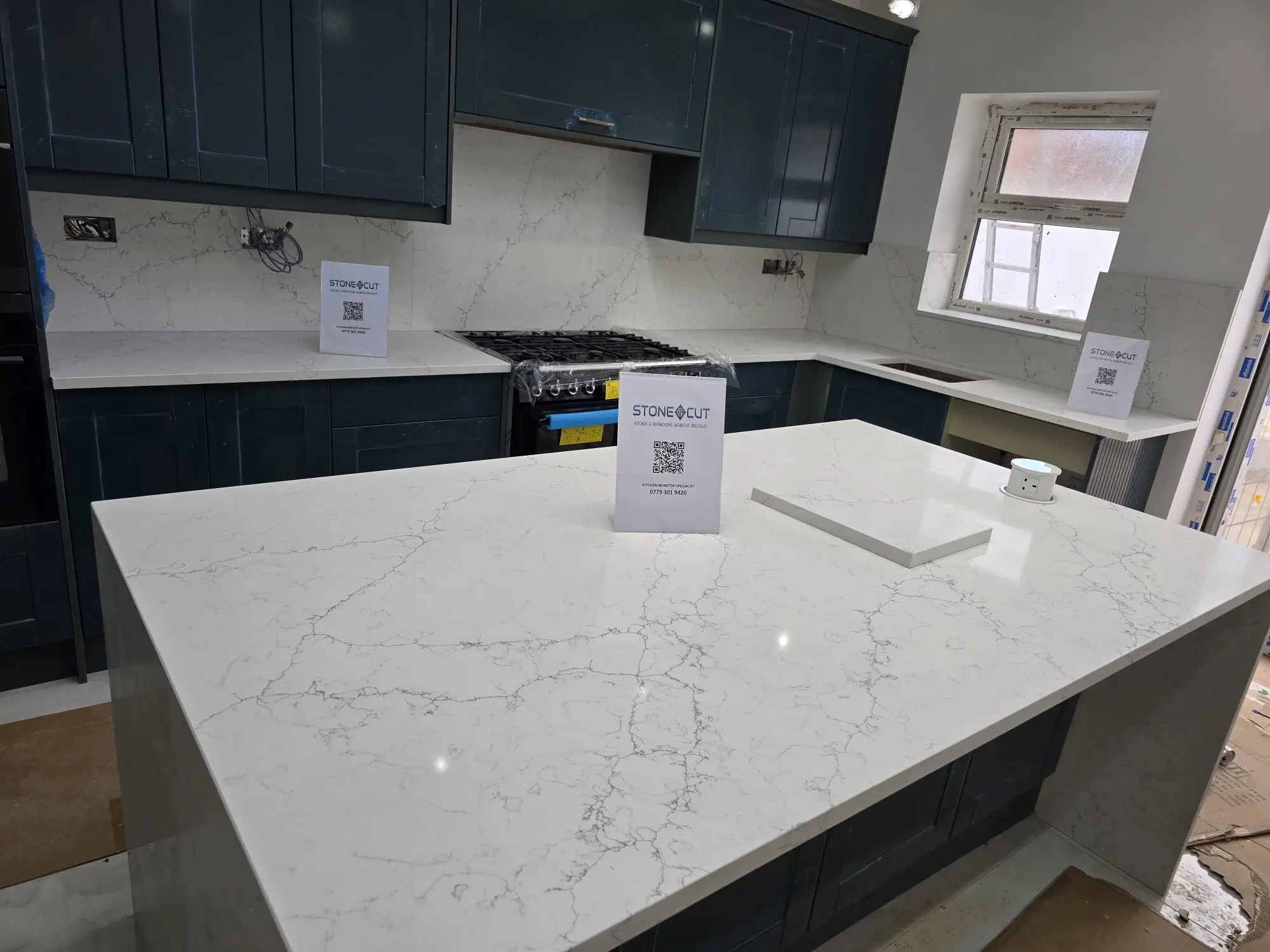
Is Quartz Stain and Scratch Resistant? Here’s What You Need to Know
When choosing a worktop material for your kitchen or bathroom, durability is a top priority. One of the most common questions we get at Stonecut is:
“Is quartz stain and scratch resistant?”
The short answer is yes—but with a few caveats.
In this post, we’ll explain how stain and scratch-resistant quartz really is, what makes it so popular, and how to care for it to keep it looking its best.
What Is Quartz?
Quartz worktops are engineered stone surfaces made from approximately 90–95% crushed natural quartz, mixed with resins and pigments. This combination makes quartz surfaces non-porous, durable, and easy to maintain—ideal for modern kitchens and bathrooms.
✅ Is Quartz Stain Resistant?
Yes, quartz is highly stain resistant.
Because quartz is non-porous, it doesn’t absorb liquids the way natural stones like marble or granite can. This means spills from:
- Wine
- Coffee
- Juice
- Oil
- Makeup
Cleaning products
…are less likely to leave permanent stains—as long as they’re cleaned up promptly.
➕ Why Quartz Resists Stains:
- No sealing required – Unlike marble or granite, quartz doesn’t need sealing.
- Non-porous surface – Liquids stay on the surface and don’t soak in.
- Uniform composition – Engineered quartz is more consistent, reducing areas where stains can penetrate.
Quartz Staining Tip:
Avoid leaving strong chemicals or dyes (like nail polish remover or hair dye) on quartz for extended periods—they can discolour or damage the resin.
✅ Is Quartz Scratch Resistant?
- Quartz is scratch resistant, but not scratch proof.
Thanks to its high quartz content, the surface is very hard—ranking around 7 on the Mohs hardness scale (diamond is 10). This makes it far more resistant to scratches than marble, limestone, or laminate.
However, it’s still best to avoid direct contact with sharp objects.
➕ How Quartz Handles Scratches:
- Everyday use won’t easily scratch quartz.
- It’s tougher than most household surfaces.
- Perfect for busy kitchens and bathrooms.
Quartz Scratch Tip:
Avoid cutting directly on quartz. Always use a chopping board to protect the surface and your knives.
How to Keep Quartz Looking New
Here’s how to maintain your quartz worktop and keep it stain and scratch-resistant:
- Wipe spills quickly with warm water and mild detergent.
- Use coasters under glasses and mugs.
- Avoid harsh chemicals like bleach or oven cleaner.
- Don’t use scouring pads or steel wool.
- Place hot pans on trivets—quartz can handle some heat, but extreme temperatures may damage the resin.
Premium Quartz Worktops in London – Stonecut
At Stonecut, we supply and install bespoke quartz worktops across London, Surrey, and surrounding areas. Our quartz surfaces are available in a wide range of colours, patterns, and finishes to suit any interior.
✅ Durable
✅ Hygienic
✅ Easy to maintain
Get a free quote today and let our expert team help you find the perfect quartz surface for your home.
Quick FAQ
Is quartz stain resistant?
Yes, quartz is non-porous and highly resistant to most common stains.
Can quartz scratch?
Quartz is scratch resistant but not scratch proof. Use a chopping board to protect it.
Does quartz need sealing?
No, quartz surfaces do not require sealing like natural stone.
Is quartz a good choice for kitchens or bathrooms?
Absolutely—quartz is ideal for areas where moisture, spills, and heavy use are common.
What Can Stain or Damage a Quartz Worktop?
Quartz is resistant to many everyday spills, but stain resistance does not mean stain-proof. Prolonged contact with strongly coloured liquids, cosmetics, oils, dyes, adhesives or unsuitable cleaning chemicals can discolour some surfaces. The risk depends on the product formulation, finish and how quickly the spill is removed.
Quartz can also be scratched or chipped by sharp tools, abrasive materials or heavy impact. Its mineral content is hard, but the finished worktop is an engineered composite and its resin component can be affected by heat and chemicals. A hardness rating for the mineral quartz should not be interpreted as a guarantee that a finished worktop cannot be scratched.
How to Clean and Protect Quartz
- Wipe spills promptly with a soft cloth, warm water and mild detergent.
- Use a chopping board rather than cutting directly on the surface.
- Place hot pans, heated appliances and hair tools on suitable heat-resistant mats or trivets.
- Avoid abrasive pads, scouring powders and aggressive chemicals unless the manufacturer expressly approves them.
- Rinse away cleaning residue and dry the surface to reduce streaks or deposits.
- Follow the care instructions and warranty conditions for the exact quartz brand and finish.
Quartz vs Granite and Porcelain: Does Resistance Differ?
Quartz is valued for its consistent appearance and resistance to many common stains. Granite is a natural stone whose porosity and sealing requirements vary from slab to slab. Porcelain has different manufacturing characteristics and is often selected for its heat and UV resistance, although edges can be vulnerable to impact. No material is completely damage-proof, so compare the specific product and intended use rather than relying on broad claims.
Explore Stone Cut’s quartz worktop collection, compare granite surfaces and read our guide to porcelain worktops before choosing.
Quartz Worktop Care: Common Questions
Can you put a hot pan on quartz?
No. Sudden or prolonged heat can damage the resin or cause discolouration. Always use a trivet and follow the manufacturer’s temperature guidance.
Does quartz need to be sealed?
Most engineered quartz worktops do not require routine sealing. Check the product-specific care instructions rather than applying a natural-stone sealant.
Can a scratch or stain be repaired?
Some marks can be removed or repaired by a specialist, but the result depends on the depth, location, finish and product. Do not attempt abrasive polishing or chemical treatment without professional advice.
How Long Can a Spill Stay on Quartz?
The safest approach is to clean spills as soon as you notice them. A quick wipe is usually enough for water and many everyday kitchen spills, but strongly coloured liquids, oils, cosmetics, dyes and sticky foods should not be left to dry on the surface. Dried residue can be harder to remove and aggressive scrubbing may create a dull patch. Stain resistance is not a reason to leave spills unattended.
Does the Colour or Finish Affect Stain Visibility?
The underlying resistance is determined by the specific engineered product, not simply whether it is light or dark. However, colour and finish can change how visible marks appear. Very pale surfaces may show coloured spills, while dark polished surfaces can make dried water, fingerprints and dust more noticeable. Matt, textured and patterned finishes may have different cleaning requirements. Ask the supplier for care guidance for the exact colour and finish you are buying.
What to Do If Quartz Develops a Mark
Start with the manufacturer’s recommended daily cleaner, warm water and a soft microfibre cloth. Do not immediately reach for bleach, paint remover, oven cleaner, strong solvents, abrasive powders or a scouring pad. If a mark remains, identify what caused it and contact the supplier or a qualified stone-care professional before trying a stronger treatment. A stain, chemical discolouration, resin damage and surface scratch can look similar but need different treatment.
Do not try to sand, polish or use a razor blade on the worktop unless the manufacturer specifically instructs you to do so. DIY abrasion can alter the sheen and leave a larger visible repair area. Keep the product name, installation details and photographs of the affected area available when asking for advice.
Quartz in Kitchens and Bathrooms: Different Risks
Kitchen worktops face knives, pans, oils, wine, coffee and food acids. Bathroom vanity tops are more likely to encounter cosmetics, hair dye, nail products, toothpaste and bathroom cleaners. In both rooms, use suitable mats, boards and coasters, and keep chemical products in their containers rather than placing them directly on the surface. Hair straighteners and hot pans should always rest on a heat-resistant mat or trivet because heat can damage the resin in engineered quartz.
More FAQs About Quartz Stains and Scratches
Can red wine or coffee permanently stain quartz?
Quartz resists many everyday spills, but no blanket guarantee applies to every brand and finish. Wipe red wine and coffee promptly. If a mark remains after gentle cleaning, seek product-specific advice rather than using a harsh chemical.
Can metal marks be removed from quartz?
Some grey marks may be metal transfer rather than a scratch, but it is not always easy to tell. Use only a cleaning method approved for the surface and avoid abrasive tools that could change the finish.
Will sealing make quartz more stain resistant?
Most engineered quartz worktops do not need routine sealing. Applying an unsuitable sealant may leave residue or affect the appearance. Check the manufacturer’s instructions before using any treatment.
To compare quartz with other popular worktop materials and read more about everyday care, heat resistance and maintenance, visit our kitchen worktop guides.
