

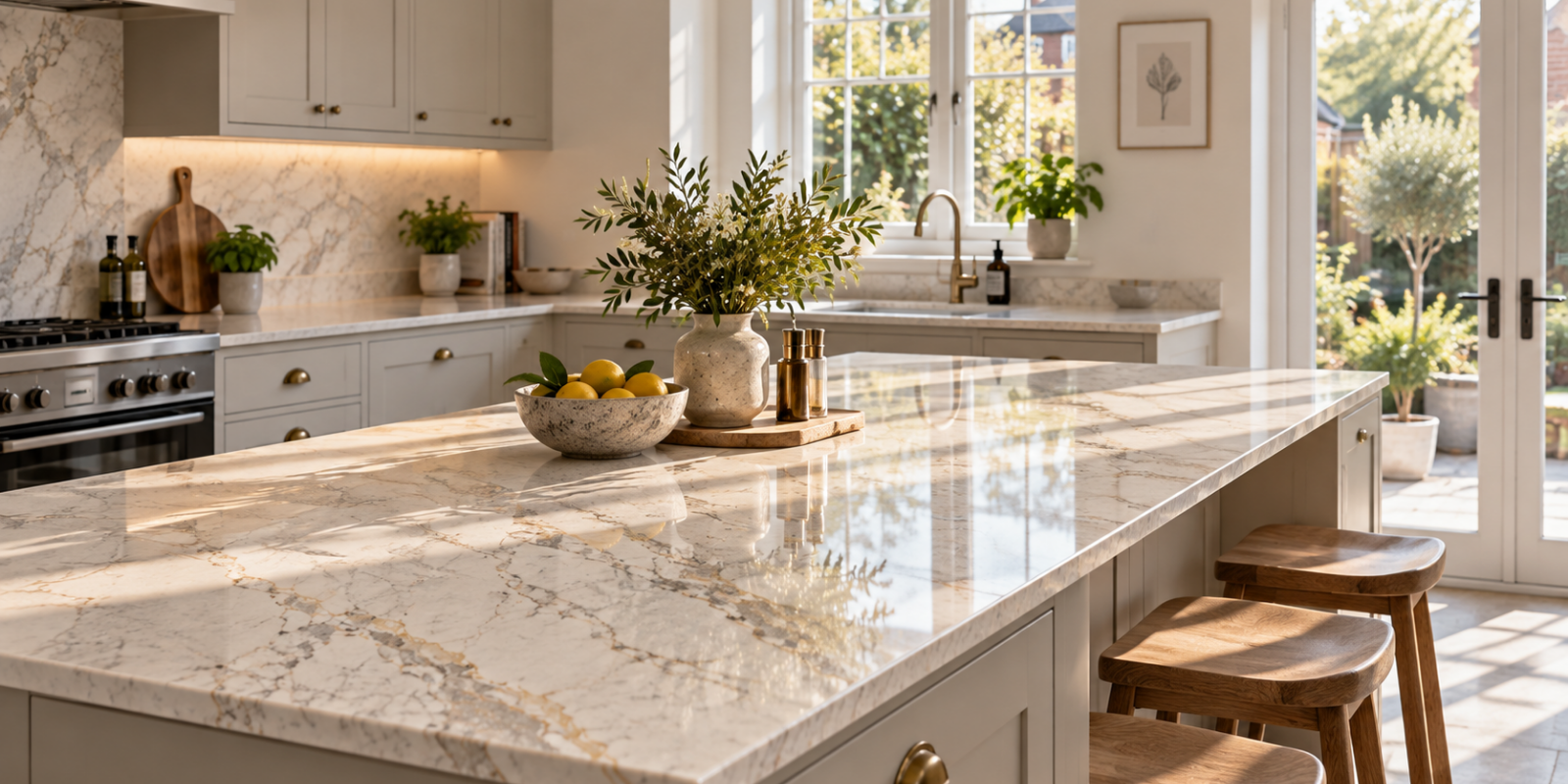
Choosing a stone worktop is not only about selecting the right colour, pattern or material. The amount and direction of natural light in your kitchen can dramatically change how a worktop looks throughout the day.
Quartz, granite, marble, quartzite and porcelain surfaces can all appear slightly different depending on sunlight, window position, room orientation and even the season. A worktop that looks warm and creamy in a showroom may appear cooler in a north-facing kitchen, while subtle veining can become much more noticeable in strong daylight.
Understanding how natural light affects stone worktops can help you choose a surface that continues to look beautiful in your home in every lighting condition.
Why Does Natural Light Affect Stone Worktops?
Natural daylight changes constantly.
Unlike artificial lighting, which usually provides a relatively consistent colour temperature, sunlight varies depending on:
- The time of day
- The direction your windows face
- Weather conditions
- The season
- The size of the windows
- Nearby buildings or trees
- The colour of surrounding cabinets, walls and flooring
Stone surfaces reflect and absorb this light differently depending on their colour, finish, pattern and mineral composition.
As a result, the same stone worktop can look noticeably different in two separate kitchens.
How Different Kitchen Orientations Affect Worktop Colours
The direction your kitchen faces is one of the biggest factors influencing how your worktop appears.
| Kitchen Orientation | Typical Natural Light | Effect on Stone Worktops |
|---|---|---|
| North-facing | Cooler, softer light | Can make white, grey and blue tones appear cooler |
| South-facing | Bright, warm light | Enhances warm tones, gold veining and creamy colours |
| East-facing | Bright morning light | Worktops may appear warmer during the morning |
| West-facing | Strong afternoon light | Warm colours and veining can become more noticeable later in the day |
North-Facing Kitchens
North-facing kitchens generally receive cooler and more indirect daylight.
This can make certain stone colours appear slightly more blue, grey or muted.
White quartz worktops, light grey quartz surfaces and cool-toned marble-effect designs often work particularly well in these spaces because their colouring complements the natural light.
However, very cold greys can sometimes appear darker than expected.
If you want to create a warmer atmosphere, consider surfaces with:
- Soft beige backgrounds
- Cream tones
- Warm grey colouring
- Gold or brown veining
These warmer details can help balance cooler natural lighting.
South-Facing Kitchens
South-facing rooms typically receive strong, warm sunlight throughout much of the day.
This type of lighting can make stone worktops appear brighter and warmer.
Calacatta quartz worktops with gold veining, creamy quartz surfaces and warm natural granite can look particularly striking in south-facing kitchens.
Strong sunlight can also make veining and mineral patterns more visible.
If your kitchen already receives a large amount of sunlight, you may prefer a softer or less reflective worktop finish to avoid excessive glare.
East-Facing Kitchens
East-facing kitchens receive stronger sunlight during the morning.
Warm morning light can make white and cream worktops appear softer and slightly warmer.
As the day progresses, however, the room may become cooler and more neutral.
This means it is particularly important to view stone samples at different times of the day before making a final decision.
West-Facing Kitchens
West-facing rooms receive stronger sunlight during the afternoon and evening.
This warmer light can emphasise:
- Gold veining
- Beige tones
- Brown minerals
- Cream backgrounds
- Warm grey surfaces
If you spend most of your time in the kitchen during the afternoon or evening, consider how your chosen stone looks during this period.
How Natural Light Affects White Worktops
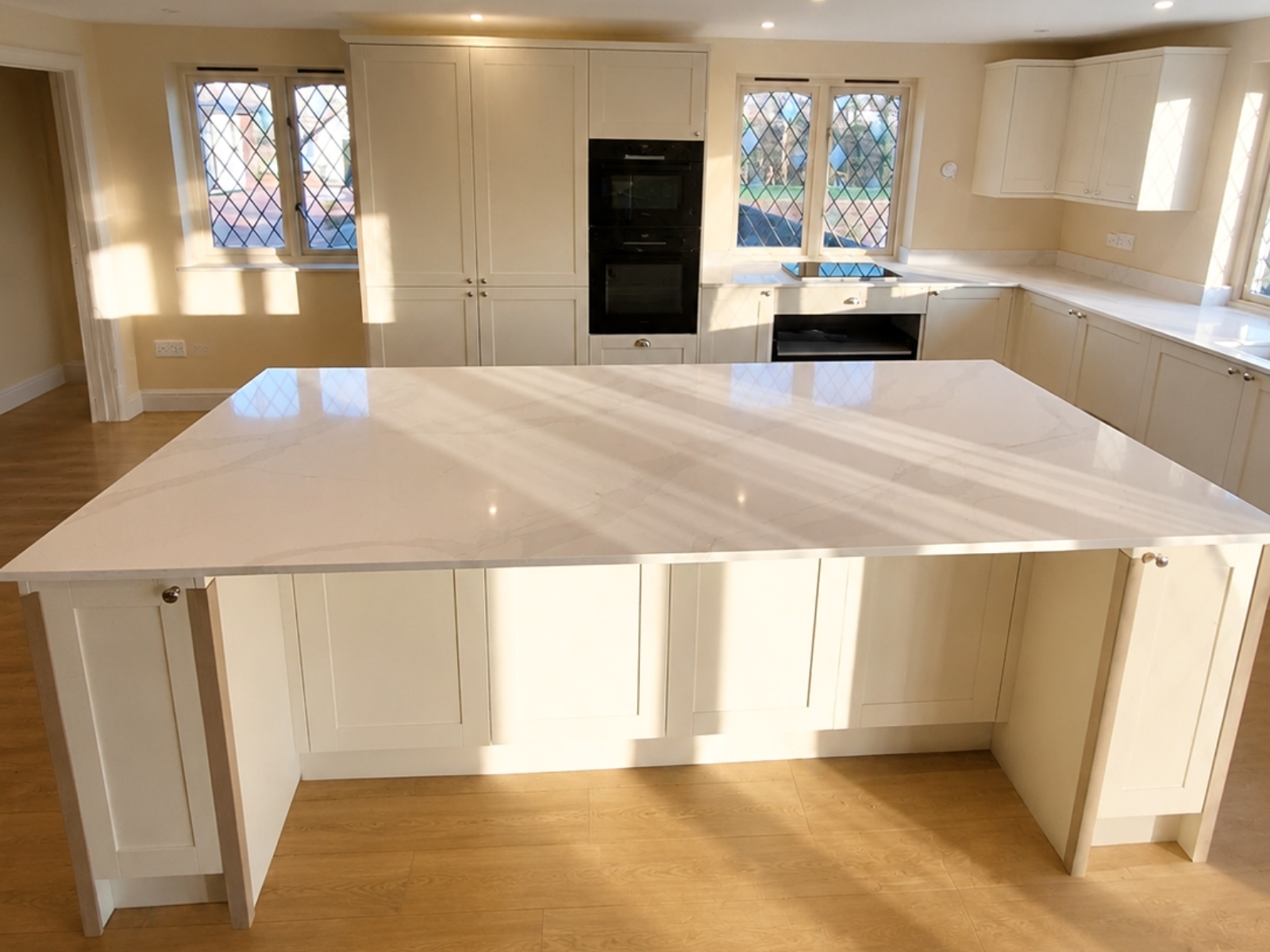
White worktops are extremely popular because they help kitchens feel brighter, larger and cleaner.
However, not all white stone surfaces look the same under natural light.
A bright white quartz worktop can appear almost pure white in strong daylight but slightly grey in a darker room.
Similarly, warm white surfaces may appear:
- Creamier in warm sunlight
- More neutral in indirect daylight
- Slightly darker in shaded areas
White surfaces with veining can also change considerably. Under soft lighting, the veins may appear subtle. In strong sunlight, the same pattern can become much more prominent.
If you are mainly considering quartz, comparing the best colour for quartz countertops can help you decide whether white, grey, beige or darker tones will suit your kitchen lighting better.
How Natural Light Affects Grey Stone Worktops
Grey worktops are particularly sensitive to lighting conditions.
Light grey quartz worktops can appear almost white in bright sunlight, while darker grey surfaces may reveal additional undertones.
Depending on the lighting, grey stone can sometimes reveal hints of:
- Blue
- Green
- Beige
- Brown
- Silver
This is why choosing a grey worktop purely from an online photograph can be difficult.
Viewing a physical sample inside your kitchen gives you a much more accurate idea of how the colour will behave.
How Natural Light Affects Black and Dark Worktops
Dark stone worktops can create a dramatic and sophisticated kitchen design.
However, natural light plays an important role in determining how dark surfaces appear.
In kitchens with limited daylight, black quartz or dark granite can make the space feel smaller if used extensively.
In brighter kitchens, however, dark worktops can provide attractive contrast against lighter cabinets and flooring.
Strong daylight can also reveal additional details that may not be visible under artificial lighting, including:
- Fine mineral patterns
- Metallic flecks
- Subtle veining
- Surface texture
Polished dark surfaces may also reflect windows and sunlight more noticeably.
How Natural Light Changes Quartz Worktops
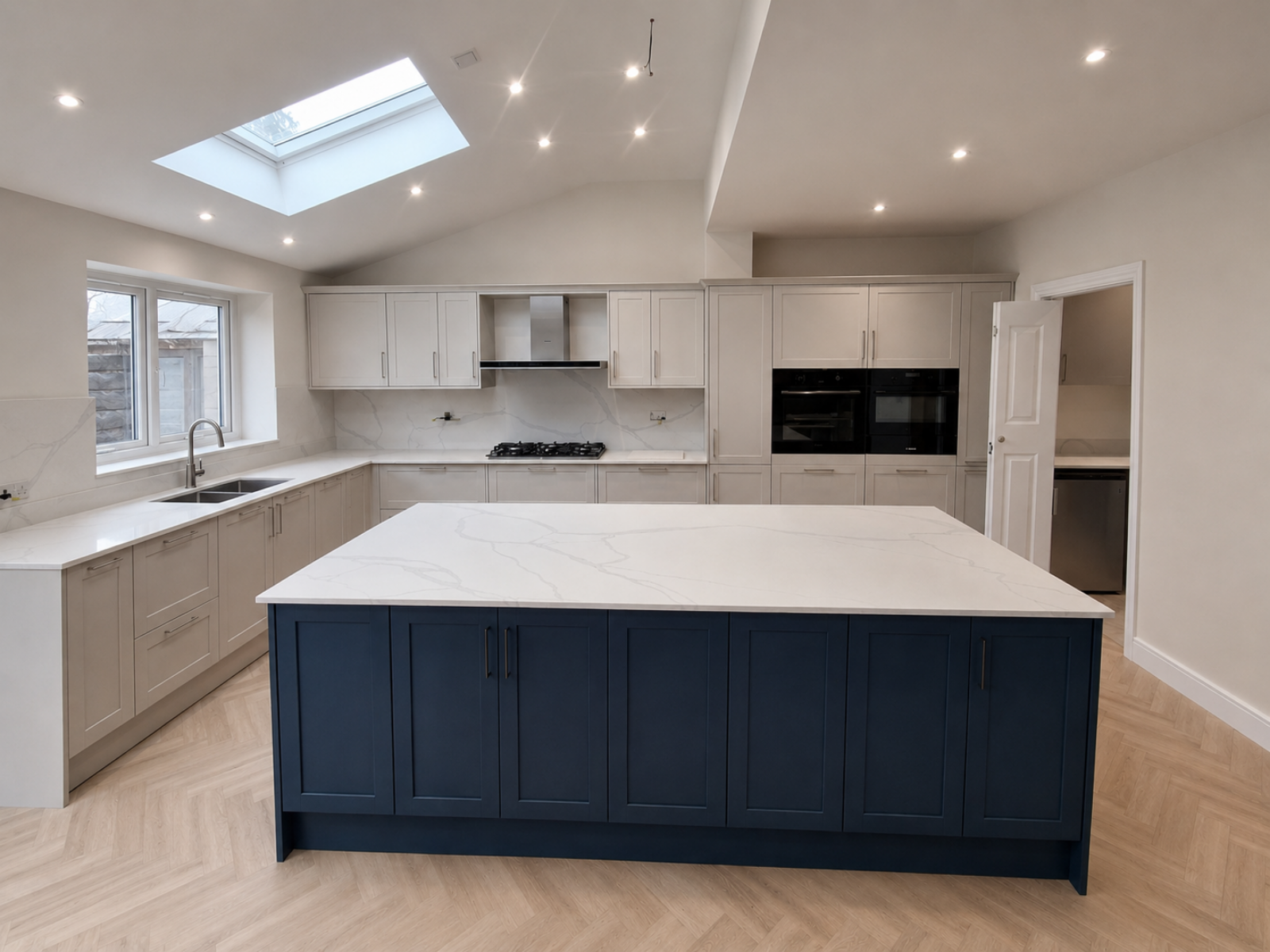
Quartz worktops are engineered using quartz minerals, resins and pigments.
Because of this, their colour and pattern are generally more consistent than natural stone.
Even so, lighting can still significantly change their appearance.
Calacatta-style quartz, for example, often contains a white background with grey, gold or brown veining.
In bright sunlight, the contrast between the background and veins may become stronger.
In softer lighting, the design can appear more subtle. This is particularly important when choosing quartz kitchen worktops with dramatic veining.
How Natural Light Changes Granite Worktops
Granite is a natural material containing different minerals and crystals. Natural daylight can reveal details within granite that may not be obvious under indoor lighting.
Depending on the granite, sunlight may highlight:
- Quartz crystals
- Metallic minerals
- Speckled patterns
- Colour variations
- Natural movement
Some granite worktops appear relatively uniform from a distance but become much more detailed when sunlight reaches the surface. This natural variation is one of the reasons granite remains popular for kitchen worktops.
Natural light also reveals one of the visual differences between these materials, which is useful to consider when comparing quartz vs granite worktops for your kitchen.
How Natural Light Changes Marble Worktops
Marble can react beautifully to daylight because of its natural depth and translucent qualities. Certain marble surfaces can appear almost luminous when exposed to strong natural light.
Natural light can also emphasise:
- Veining
- Mineral variation
- Cloudy patterns
- Subtle colour changes
White marble with grey veining may appear cooler in north-facing kitchens, while marble containing gold or beige tones may appear noticeably warmer in direct sunlight.
Because every marble slab is unique, viewing the full slab before fabrication is particularly useful.
How Natural Light Changes Quartzite Worktops
Quartzite is a natural stone that often contains significant depth and movement. Many quartzite worktops include layered colours, crystalline areas and dramatic natural veining. Strong daylight can reveal this depth particularly well.
Some quartzite surfaces may appear relatively pale in low lighting but show stronger green, blue, beige or gold tones when exposed to daylight. The exact effect depends on the individual slab.
How Natural Light Changes Porcelain Worktops
Porcelain worktops are manufactured surfaces with printed or digitally created patterns.
Their colour tends to remain relatively consistent, but natural lighting still influences how the surface appears.
The biggest difference often comes from the finish.
A polished porcelain worktop may reflect considerably more daylight than a matt surface.
Matt porcelain tends to absorb more light, producing a softer appearance.
Polished vs. Matt Worktops in Natural Light
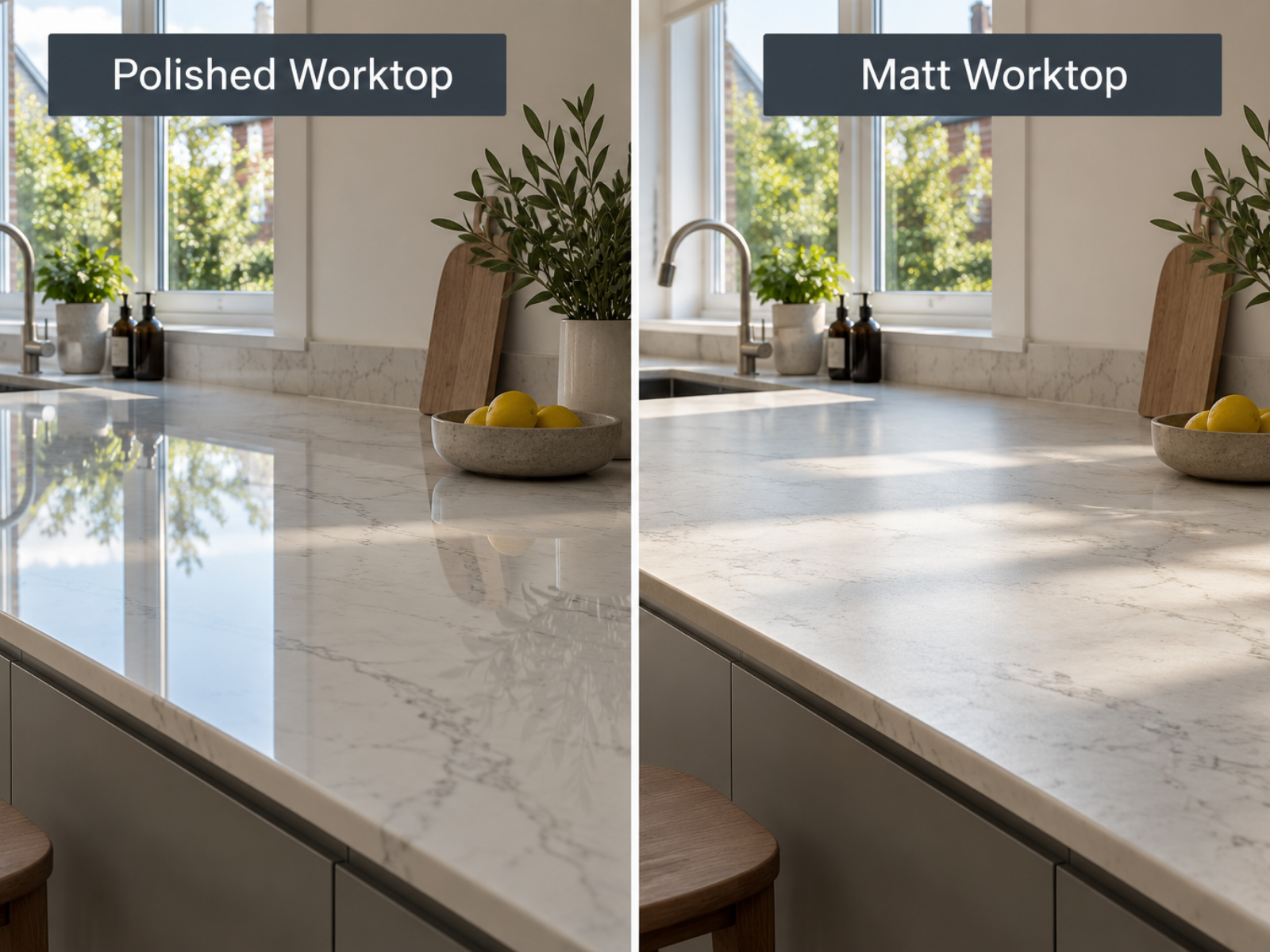
Surface finish is almost as important as colour.
Polished Stone Worktops
Polished surfaces reflect more light.
This can help make a kitchen feel brighter, particularly in rooms with large windows.
However, strong sunlight can sometimes produce noticeable reflections or glare.
Polished surfaces can also make colours and veining appear slightly richer.
Matt or Honed Worktops
Matt surfaces reflect less light.
They tend to create a softer, more understated appearance.
A matt worktop may be particularly suitable for kitchens with strong direct sunlight where excessive reflection would otherwise become distracting.
Does Sunlight Fade Stone Worktops?
Most high-quality kitchen worktops are designed to maintain their appearance for many years when used indoors.
However, prolonged exposure to intense UV light can affect certain materials.
Engineered quartz, for example, contains resins and pigments that may be more sensitive to prolonged UV exposure than natural granite.
This is one reason quartz is generally recommended primarily for indoor kitchens unless the manufacturer specifically approves the product for outdoor use.
Natural stones such as granite are usually more resistant to UV exposure, although individual stones can still behave differently.
Why Stone Samples Should Be Viewed in Your Kitchen
One of the best ways to choose a worktop is to view a sample inside your actual kitchen.
A showroom environment may use bright artificial lighting that looks very different from your home. Place the sample near:
- Kitchen cabinets
- Flooring
- Splashbacks
- Wall colours
- Windows
Then check it during the morning, afternoon and evening. Viewing samples at home is also an important step when trying to choose the right kitchen worktops, alongside considering durability, maintenance, colour and overall kitchen design.
This allows you to see whether the surface becomes warmer, cooler, brighter or darker as the light changes.
Worktop Colours for Kitchens With Limited Natural Light
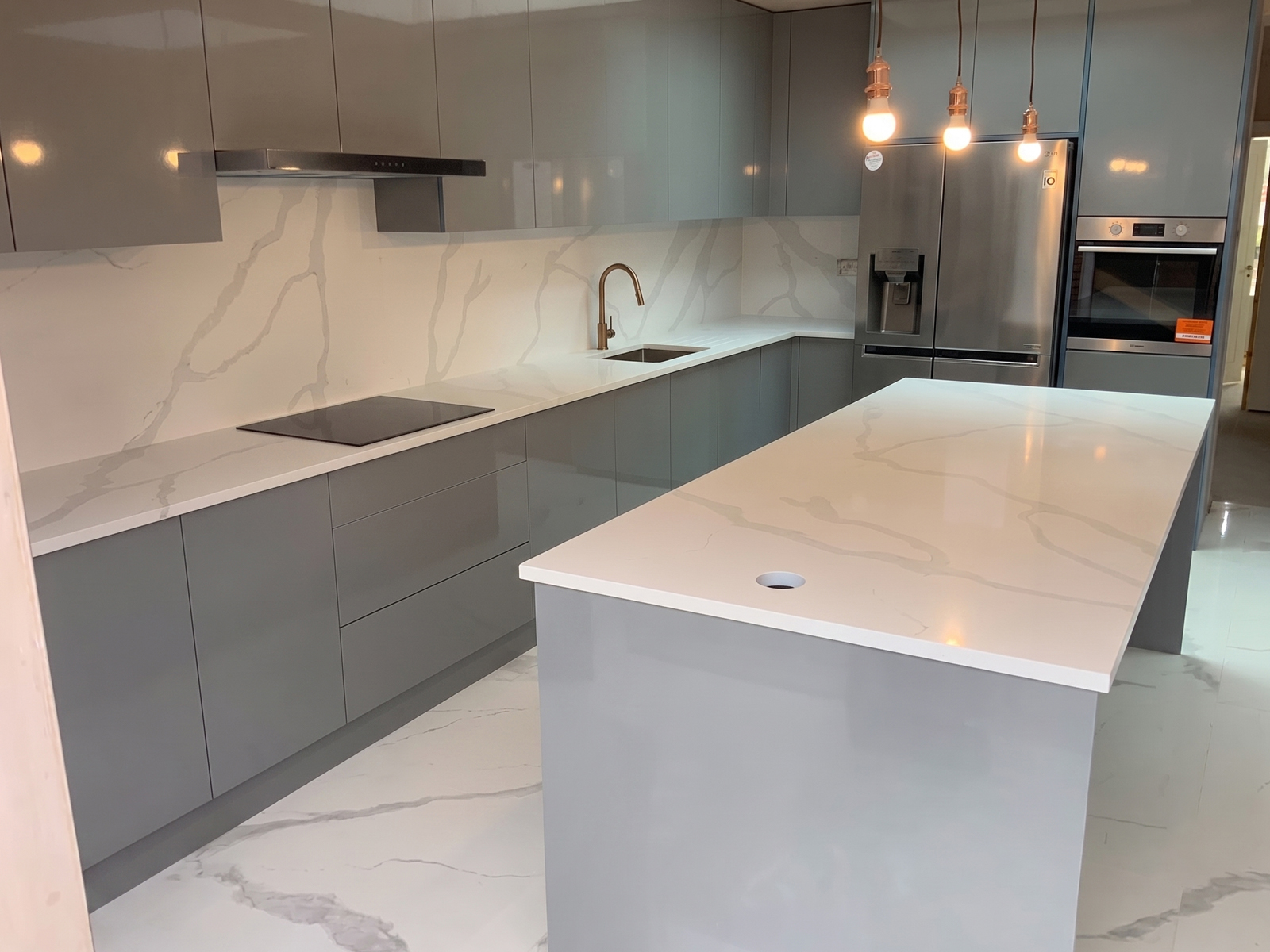
If your kitchen receives relatively little daylight, lighter surfaces can help reflect available light around the room.
Popular options include:
- White quartz worktops
- Off-white quartz surfaces
- Cream worktops
- Light grey quartz worktops
- White marble-effect quartz
- Light porcelain worktops
Using lighter cabinet colours and reflective splashbacks can also help make the room feel brighter.
Worktop Colours for Bright Kitchens
Kitchens with large windows, roof lights or bifold doors give you more flexibility.
Both light and dark worktops can work successfully.
You may consider:
- Dramatic Calacatta quartz
- Dark granite
- Black quartz
- Green quartzite
- Strongly veined marble
- Dark porcelain surfaces
Bright natural light often allows the details within these materials to become much more noticeable.
Natural Light and Kitchen Cabinet Colours
Your cabinet colour also affects how your stone worktop appears. For example, the same white quartz worktop can look very different next to:
- Navy blue cabinets
- Dark green cabinetry
- White cabinets
- Natural oak
- Grey cabinets
- Black cabinetry
Surrounding colours influence how our eyes perceive the surface. This is another reason samples should ideally be viewed alongside your final cabinet finish.
Choosing the Right Stone Worktop for Your Kitchen Lighting
When comparing different worktop materials, consider more than just the photograph or showroom display.
Natural light is only one factor to consider when selecting a surface, so it is also worth understanding how to choose the right stone colour for kitchen worktops based on cabinetry, flooring and the overall style of the room.
Think about:
- Which direction your kitchen faces
- How large your windows are
- Whether the kitchen receives direct sunlight
- Your cabinet colours
- Your flooring
- Your preferred worktop finish
- How the surface looks at different times of the day
These factors can significantly affect the final appearance of your kitchen.
At Stone Cut, customers can explore a wide range of quartz, granite, porcelain, marble and quartzite worktops to find a surface that complements both their kitchen design and lighting conditions.
Frequently Asked Questions
- Does natural light change the actual colour of a stone worktop?
Natural light normally changes how we perceive the colour rather than permanently changing the stone itself. Different daylight temperatures can make the same surface appear warmer, cooler, lighter or darker. - Why does my quartz worktop look different from the showroom sample?
Showrooms typically use artificial lighting, whereas your kitchen may receive natural daylight from different directions. Cabinet colours, flooring and wall colours can also influence how the quartz appears. - Which worktop colour is best for a dark kitchen?
White, cream, off-white and light grey worktops can help reflect available light and make darker kitchens feel brighter and more spacious. - Are dark worktops suitable for kitchens with lots of natural light?
Yes. Strong natural light can work particularly well with dark quartz, granite and porcelain worktops because it creates contrast and highlights patterns within the surface. - Does sunlight damage quartz worktops?
Indoor quartz worktops generally perform very well, but prolonged direct UV exposure can potentially affect some resins or pigments over time. Always check the manufacturer’s recommendations, particularly for outdoor installations. - Should I choose a polished or matt worktop for a bright kitchen?
Both can work well. Polished worktops reflect more light and create a brighter appearance, while matt or honed surfaces reduce reflections and may be more comfortable in kitchens receiving strong direct sunlight. - Should I take a worktop sample home before ordering?
Yes. Viewing a sample in your own kitchen is one of the best ways to understand how the surface will look under your specific natural and artificial lighting conditions.
Final Thoughts
Natural light can have a surprisingly large influence on the appearance of stone worktops.
The direction of your windows, the strength of the sunlight, the time of day and surrounding kitchen colours can all make the same surface appear different.
Before choosing your final worktop, try to view samples inside your kitchen under both natural and artificial light. This will give you a much better understanding of how the colour, veining and finish will look once installed.
Whether you are considering quartz worktops, granite worktops, porcelain surfaces, marble or quartzite, choosing a material that works with your kitchen’s natural lighting will help create a balanced and attractive finished space.
