

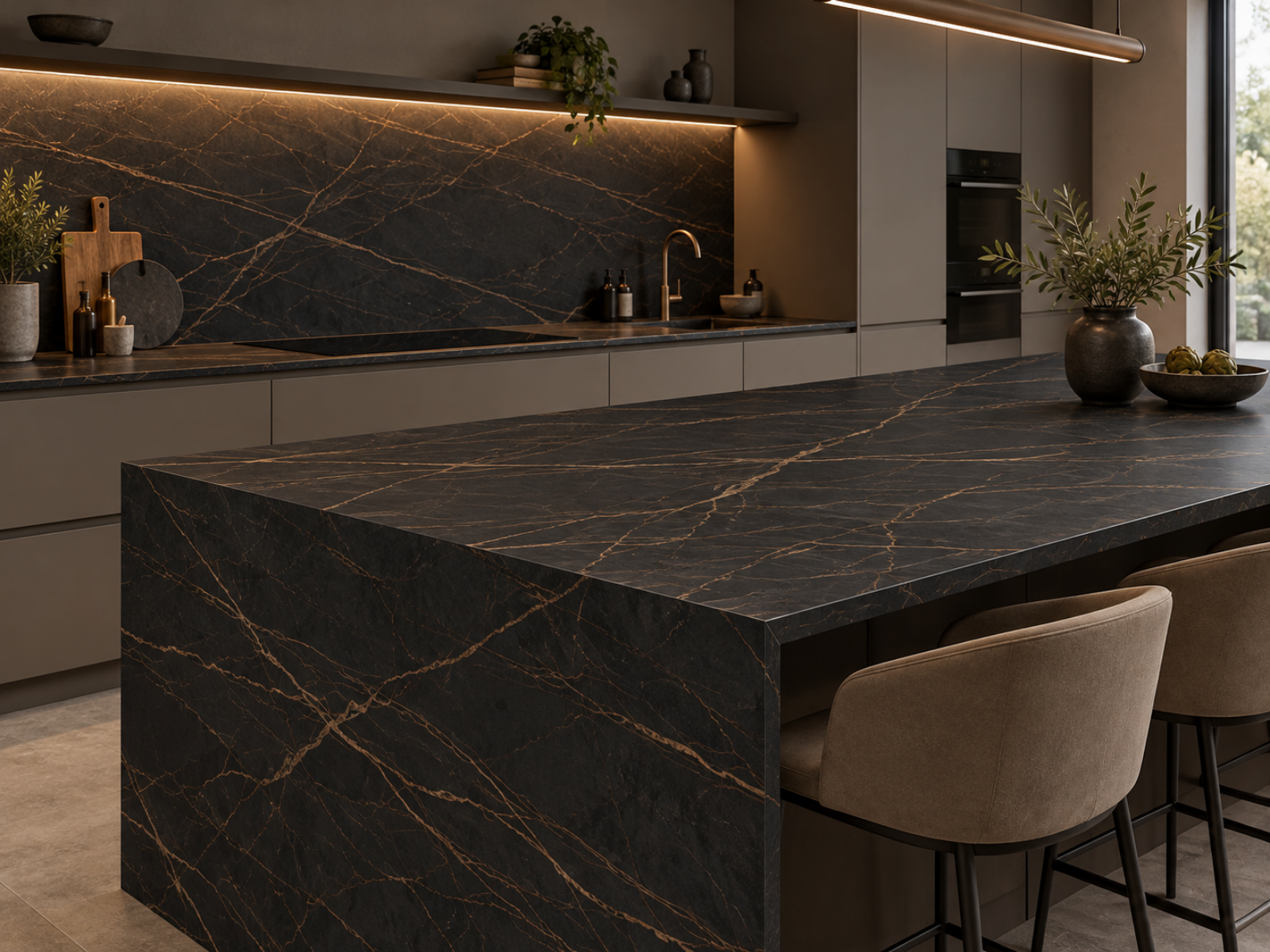
Choosing the right kitchen worktop involves balancing appearance, durability, maintenance and budget. Among the materials available today, porcelain worktops have become an increasingly popular choice for UK homeowners looking for stylish, practical and long-lasting kitchen surfaces.
Known for their excellent heat resistance, low maintenance requirements and wide range of designs, porcelain kitchen worktops offer an attractive alternative to traditional materials such as quartz, granite and marble.
However, porcelain also has limitations, including potential edge chipping and higher fabrication costs. Before investing, it is important to understand how the material performs in everyday kitchens.
In this guide, we explore the pros and cons of porcelain worktops, their prices in the UK, and how they compare with other popular worktop materials.
What Are Porcelain Kitchen Worktops?
Porcelain worktops are manufactured from refined clay, minerals and natural pigments, which are compressed and fired at extremely high temperatures. This process produces a dense, durable surface with very low water absorption.
Unlike natural stone, porcelain can be manufactured in numerous colours, patterns and textures. Modern production techniques allow it to replicate the appearance of marble, limestone, concrete and other natural materials.
Porcelain slabs are available in various thicknesses, commonly including 6mm, 12mm and 20mm, depending on the manufacturer and intended application.
At Stone Cut, our collection of porcelain worktops includes contemporary and natural stone-inspired designs suitable for different kitchen styles.
Advantages of Porcelain Worktops
Porcelain worktops offer several practical benefits, making them a popular choice for modern UK kitchens.
1. Excellent Heat Resistance
Porcelain can withstand high temperatures without easily discolouring or becoming damaged. This makes it ideal for busy kitchens, although using trivets for hot cookware is still recommended.
2. Strong Scratch Resistance
The hard surface of porcelain provides excellent resistance to everyday scratches from kitchen utensils and cookware. However, using chopping boards helps protect both the worktop and your knives.
For more comparisons, explore our guide to the most durable kitchen worktop materials.
3. Stain and Water Resistance
Porcelain has extremely low porosity, making it highly resistant to stains from coffee, wine, oils and other everyday spills. It also does not require regular sealing.
4. Low Maintenance
Porcelain kitchen worktops are easy to maintain, requiring only warm water, mild detergent and a soft cloth for everyday cleaning. No regular polishing or sealing is necessary.
5. Wide Range of Designs
Available in marble-effect, concrete-inspired and contemporary stone finishes, porcelain complements various kitchen styles. Its excellent UV resistance also helps prevent fading in sunlight.
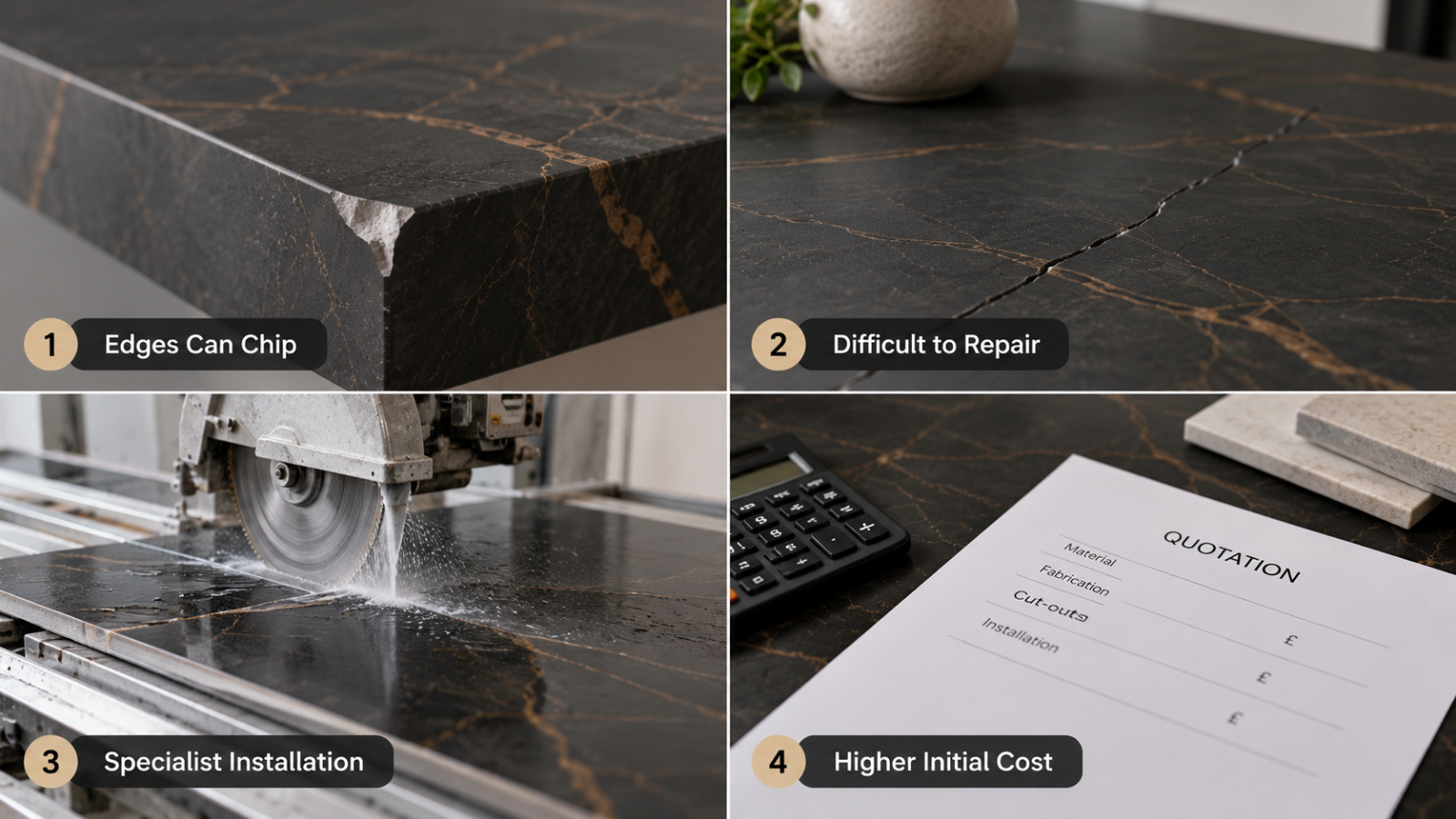
Disadvantages of Porcelain Worktops
Despite its durability, porcelain has several limitations worth considering before installation.
1. Edges Can Chip
Although highly scratch-resistant, porcelain can chip around exposed edges and corners if struck by heavy objects. Professional edge finishing helps minimise this risk.
2. Difficult to Repair
Minor chips can sometimes be repaired, but larger cracks or damaged patterns may be difficult to restore invisibly and could require replacement.
3. Specialist Installation
Porcelain requires precise cutting, careful handling and professional installation to prevent cracking, particularly around sinks and hob cut-outs.
4. Higher Initial Cost
Porcelain generally costs more than laminate and some entry-level worktops. However, its durability and low maintenance requirements can make it a worthwhile long-term investment.
How Much Do Porcelain Worktops Cost in the UK?
The cost of porcelain worktops in the UK varies depending on the manufacturer, slab thickness, design and installation requirements. As a general guide, homeowners can expect the following approximate prices in 2026.
| Porcelain worktop option | Estimated UK cost |
|---|---|
| Standard porcelain worktops | £400–£550 per m² |
| Premium porcelain worktops | £550–£750+ per m² |
| Additional sink or hob cut-outs | £80–£200 each |
| Decorative edge finishing | £20–£80 per linear metre |
| Typical medium-sized kitchen | £2,000–£5,000+ |
These figures are indicative market estimates. Actual prices vary by supplier, project specification and whether VAT, templating, delivery and installation are included.
What Affects Porcelain Worktop Prices?
Several factors influence the final quotation:
- Brand and design: Premium manufacturers and detailed marble-effect finishes generally cost more.
- Slab thickness: Thicker materials and built-up edges can increase expenses.
- Kitchen layout: Islands, waterfall ends and complicated joints require additional fabrication.
- Cut-outs: Sinks, hobs, taps and accessories may involve additional charges.
- Installation: Access difficulties, transportation and specialist fitting can affect the total cost.
For example, a kitchen requiring approximately 5m² of porcelain worktops might cost £2,000–£3,750 based on the estimated fitted rates above, before additional charges not included in the rate. Because worktops are fabricated from slabs, material wastage and slab dimensions can also influence pricing. Obtaining a detailed quotation is the most reliable way to establish the cost of your particular kitchen.
Porcelain vs Quartz vs Granite Worktops
Porcelain, quartz and granite are among the most popular premium worktop materials in UK kitchens. Although all three offer excellent durability and attractive finishes, their characteristics differ.
| Feature | Porcelain | Quartz | Granite |
|---|---|---|---|
| Heat resistance | Excellent | Moderate to good | Very good |
| Scratch resistance | Excellent | Very good | Very good |
| Stain resistance | Excellent | Excellent | Good to very good |
| Sealing required | No | No | Sometimes |
| Edge impact resistance | More vulnerable | Generally good | Generally good |
| Maintenance | Very low | Very low | Low to moderate |
| UV resistance | Excellent | Varies | Generally good |
Porcelain vs Quartz: Which Is Better?
Porcelain offers superior heat and UV resistance, making it particularly suitable for kitchens exposed to significant sunlight.
However, quartz worktops are also durable, stain-resistant and available in an extensive range of colours and patterns.
Quartz may offer greater resistance to minor edge impacts, depending on the product and fabrication.
Both materials require minimal maintenance, so the best choice depends on your budget, preferred appearance and everyday requirements.
Porcelain vs Granite: Which Should You Choose?
Granite is a natural stone valued for its distinctive patterns, strength and excellent heat resistance.
Porcelain provides greater design consistency and generally requires less maintenance because it does not need sealing.
Homeowners who appreciate unique natural patterns may prefer granite, while those seeking contemporary finishes and low maintenance may find porcelain more suitable.
How Long Do Porcelain Worktops Last?
A professionally installed porcelain worktop can last for several decades with appropriate care.
Its resistance to stains, scratches, moisture and UV exposure helps preserve its appearance, even in frequently used kitchens.
However, longevity depends on slab quality, installation standards and protection from heavy impacts.
Avoiding excessive pressure on unsupported sections and treating exposed edges carefully can help prevent unnecessary damage.
For further advice on selecting materials for everyday use, explore our kitchen worktop selection guide.
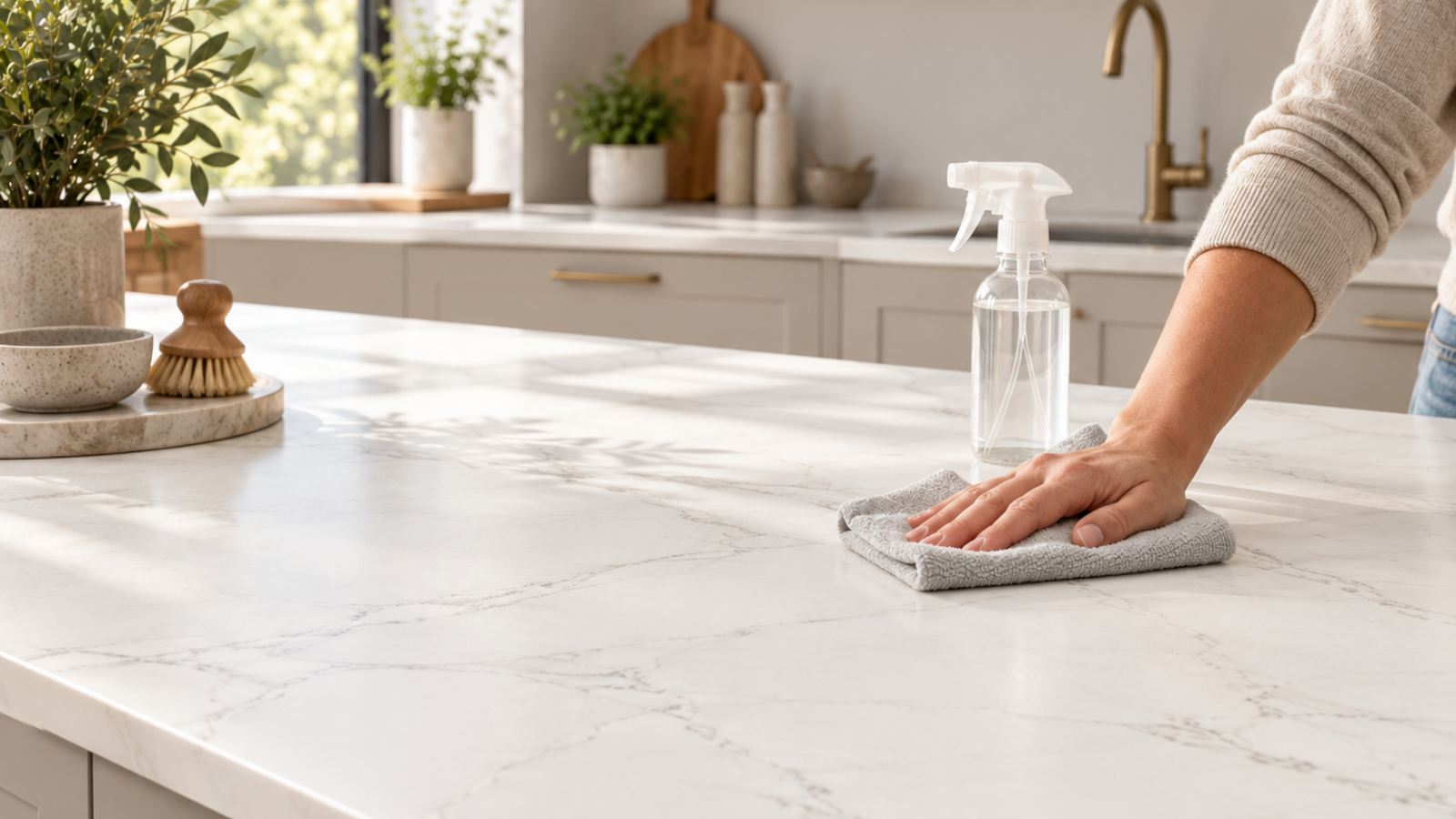
How to Clean Porcelain Kitchen Worktops
Maintaining porcelain worktops is relatively straightforward.
Use a soft cloth with warm water and mild detergent for regular cleaning. For stubborn marks, select a cleaner approved by the manufacturer.
Avoid abrasive pads, unnecessary exposure to aggressive chemicals and dragging heavy objects across exposed edges.
Although porcelain is highly heat-resistant, using trivets and chopping boards remains a sensible precaution.
With these simple habits, porcelain can maintain its attractive finish for many years.
Frequently Asked Questions
- Do porcelain worktops chip easily?
Porcelain is highly scratch-resistant, but exposed edges can chip under heavy impact. Professional fabrication and careful handling help minimise the risk. - Can you put hot pans on porcelain worktops?
Porcelain has excellent heat resistance. However, using trivets is recommended to reduce the risk of thermal shock and avoid unnecessary damage. - Are porcelain worktops cheaper than quartz?
Not necessarily. Prices overlap depending on the brand and design, although premium porcelain can be more expensive than some quartz products. - Do porcelain worktops need sealing?
No. Porcelain has extremely low porosity and generally requires no sealing or specialist routine maintenance. - What is the best thickness for porcelain worktops?
Both 12mm and 20mm porcelain slabs are popular for kitchen applications. The best option depends on the manufacturer’s specifications, support requirements and desired appearance.
Discover Porcelain Worktops at Stone Cut
Porcelain worktops combine elegant design with outstanding practicality, making them an excellent option for homeowners who want durable and attractive kitchen surfaces.
At Stone Cut, we specialise in supplying, fabricating and installing premium kitchen worktops, including porcelain, quartz, granite and marble.
Our experienced team can help you choose the right material, colour and finish to complement your kitchen while meeting your practical requirements.
Explore our porcelain worktop collection or request a free quotation to discover the best surface for your kitchen.
