Porcelain Worktops Cost UK

Discover Porcelain Prices, Compare Finishes & Plan Your Perfect Kitchen

Explore porcelain worktop prices, installation costs and the details that shape your final quotation. Expert guidance from Stone Cut, Southall, West London.

Porcelain Worktops Cost UK : Prices Per m², Fitting and What Affects the Cost

Obviously you’re planning for a new kitchen with porcelain worktops , a stylish, practical finish, but you need to know how much should you budget? The final porcelain worktops cost UK, depends on the porcelain you choose, the size and layout of your kitchen, the thickness of the slabs and the fabrication work required.

At Stone Cut, we supply, fabricate and install bespoke stone worktops from our workshop in Southall, West London. This guide explains porcelain worktop prices in the UK, how costs are calculated, what affects your quotation and what to check before choosing a fabricator.

Quick answer: Stone Cut’s porcelain worktop prices start from [Stone Cut Price]. Your final quotation depends on the selected slab, measurements, templating, fabrication, cut-outs, edge profiles, delivery and installation. Contact us for a price based on your kitchen layout and chosen finish.

Planning a Porcelain Kitchen Worktop? Know What to Budget

Explore porcelain worktop prices per m², installation costs, popular designs and the factors that influence your final quotation. Get practical advice from Stone Cut, your West London worktop specialists.

How Much Do Porcelain Worktops Cost in the UK?

Porcelain worktop prices vary considerably because not every quotation includes the same materials or services. Some suppliers advertise a material price, while others quote for a complete project covering templating, fabrication, delivery and fitting.

For an accurate comparison, check whether the quoted price includes the full installation or only the worktop material.

Porcelain worktop prices at Stone Cut

Pricing optionStone Cut price
Porcelain worktop price per m²[Stone Cut Price]
Porcelain worktop price per linear metre[Stone Cut Price]
Supply-only price[Stone Cut Price]
Supplied and fitted price[Stone Cut Price]
Porcelain kitchen island[Stone Cut Price]
Porcelain waterfall edge[Stone Cut Price]
Porcelain upstands[Stone Cut Price]

Prices should be confirmed against the selected porcelain range, thickness, measurements and specification. State clearly whether each price includes VAT, fabrication, delivery and installation.

A simple worktop run will generally require less fabrication than a kitchen with several corners, an island, multiple cut-outs and decorative edge details. This is why a bespoke quotation is more useful than relying on a single advertised starting price.

Porcelain Worktop Price Per m² vs Per Linear Metre

One reason customers find porcelain worktop prices confusing is that suppliers use different measurement units. Some quote per square metre (m²), while others use a linear metre.

Understanding the difference makes it much easier to compare quotations.

What is the price per square metre?

A square metre measures the total surface area of your worktop. It is calculated by multiplying the length by the depth.

For example, a worktop measuring 3 metres long and 600mm deep has the following surface area:

3m × 0.6m = 1.8m²

If the porcelain rate is [Stone Cut Price per m²], the surface-area calculation would be:

1.8m² × [Stone Cut Price per m²] = [Calculated Stone Cut Price]

This is an illustrative calculation. Additional fabrication, cut-outs, edge details and installation charges should be added where they are not already included in the rate.

What is the price per linear metre?

A linear metre measures the length of the worktop rather than its total surface area.

For a standard 600mm-deep worktop, one linear metre represents 0.6m² of surface.

For example:

Worktop lengthDepthSurface area
1 linear metre600mm0.6m²
2 linear metres600mm1.2m²
3 linear metres600mm1.8m²
4 linear metres600mm2.4m²

An island that is 900mm deep uses more surface area per linear metre than a standard 600mm-deep worktop. Always check the depth assumed in a linear-metre quotation.

Our advice: When comparing porcelain worktop prices, ask each supplier to confirm the measurements, material specification and services included. A lower advertised rate may not represent the lower overall project cost.

How Much Does a Porcelain Worktop Cost for a Typical Kitchen?

The cost of a porcelain kitchen worktop depends on how much surface area your kitchen needs and how complicated the fabrication will be.

A small straight kitchen, for example, may require one simple worktop run. A larger kitchen with an island could require several sections, additional joins, more cut-outs and decorative edge details.

Here are three example layouts to help you understand how the calculation works.

Example 1: Small kitchen

A small kitchen with one worktop run:

ItemMeasurement
Worktop length3 metres
Worktop depth600mm
Total surface area1.8m²
Porcelain rate[Stone Cut Price per m²]
Estimated surface cost[Calculated Stone Cut Price]

Example 2: Medium L-shaped kitchen

An L-shaped kitchen with two worktop runs:

ItemMeasurement
First worktop run3 metres × 600mm
Second worktop run2 metres × 600mm
Total surface area3.0m²
Porcelain rate[Stone Cut Price per m²]
Estimated surface cost[Calculated Stone Cut Price]

The final quotation may also include corner detailing, a hob cut-out, sink cut-out and any required joins.

Example 3: Kitchen with a large island

A kitchen with a wall worktop and a separate island:

ItemMeasurement
Main worktop5m × 600mm
Island2.4m × 900mm
Main worktop area3.00m²
Island area2.16m²
Total surface area5.16m²
Porcelain rate[Stone Cut Price per m²]
Estimated surface cost[Calculated Stone Cut Price]

A waterfall island, mitred edges or a large overhang may add to the fabrication requirements.

Please note: These examples calculate the surface area only. They are not fixed installation quotations. The final price depends on slab selection, material planning, fabrication, cut-outs, edges, delivery and fitting.

What Factors Affect the Cost of Porcelain Worktops?

Two porcelain kitchens can look quite similar but have different quotations. The reason is that the cost is affected by more than the size of the worktop.

Here are the main factors to consider.

1. Porcelain brand, colour and design

Porcelain worktops are available in a wide range of colours, textures and finishes. Some designs have subtle stone-inspired patterns, while others feature dramatic marble-style veining, concrete effects or darker contemporary finishes.

The selected range, slab availability, pattern and finish can all influence the price.

Large-pattern designs may also require more careful planning so that the veining and visual details flow naturally across different sections of the kitchen.

At Stone Cut, you can explore our porcelain worktop collection to discover available designs and finishes.

2. Slab size and material usage

Porcelain slabs are manufactured in different formats depending on the brand and product range.

Your kitchen dimensions need to be planned around the available slab size. A layout that makes efficient use of the slab may reduce unnecessary waste, while a complicated design can require additional material.

The number of slabs required is not always determined by the total surface area alone. Slab layout, cutting direction, pattern matching, joins and fabrication requirements also matter.

This is why professional measurement and material planning are important before confirming a final price.

3. Porcelain thickness: 12mm vs 20mm

Porcelain worktops are available in different thicknesses, depending on the manufacturer and product range.

Two commonly discussed options are 12mm and 20mm.

Feature12mm porcelain20mm porcelain
AppearanceSlim, contemporary profileMore substantial appearance
Visual styleSuits minimalist kitchensSuits a bolder worktop design
Material requirementDepends on the selected slabGenerally uses more material
Edge designCan be finished in a slim profile or built-up designCan provide a thicker-looking edge
CostDepends on brand and specificationDepends on brand and specification

A thicker slab does not automatically mean a better worktop. The right option depends on the product specification, kitchen design, installation requirements and your preferred appearance.

Before choosing: Check which thicknesses are available for your selected porcelain design and ask your fabricator how the chosen thickness will affect the finished edge and installation.

4. Edge profiles and mitred edges

The edge of a porcelain worktop makes a noticeable difference to the finished kitchen.

A simple finished edge creates a clean, understated appearance. More detailed designs, such as mitred edges, can create the appearance of a thicker worktop without using a solid slab of that full thickness.

Popular options include:

  • Straight or square edge

  • Polished edge

  • Mitred edge

  • Built-up edge

  • Waterfall island edge

A mitred edge requires additional cutting, preparation and careful joining. A waterfall design also involves matching the vertical side panel to the island worktop.

The final cost depends on the selected edge, length, number of corners and fabrication requirements.

5. Sink, hob and tap cut-outs

Cut-outs are another important part of a porcelain worktop quotation.

Most kitchens require openings for a sink and hob. Some designs also include additional tap holes, pop-up sockets or other fittings.

The fabrication requirements depend on the appliance or sink specification and the chosen installation method.

Common examples include:

  • Standard sink cut-out

  • Undermount sink cut-out

  • Hob cut-out

  • Tap holes

  • Pop-up socket openings

  • Drainer grooves

Undermount sinks and integrated drainer grooves may require additional fabrication. The sink and appliance specifications should be available before templating and cutting.

Ask for each cut-out to be listed clearly in your quotation so you understand what is included.

6. Joins and seam positioning

A join is where two sections of worktop meet.

Some kitchen layouts can be produced with fewer visible joins, while longer runs, corners and large islands may require multiple pieces.

The number and position of joins depend on:

  • Available slab dimensions

  • Kitchen measurements

  • Worktop depth

  • Access into the property

  • Pattern direction

  • Fabrication and installation requirements

A professional fabricator will plan the layout carefully to achieve a practical fit and a neat finish.

With patterned porcelain, seam positioning can also affect how the design flows across the finished kitchen.

7. Upstands and splashbacks

Upstands and splashbacks can be made to complement your porcelain worktop.

An upstand is a strip of material fitted along the back edge of a worktop. A full-height splashback covers a larger section of the wall, often behind a hob or across a kitchen feature wall.

Your options may include:

  • Standard-height upstands

  • Full-height porcelain splashbacks

  • Matching island panels

  • Decorative wall panels

The price depends on the dimensions, thickness, cutting requirements and installation details.

Using matching porcelain can create a consistent look throughout the kitchen, particularly when the worktop and splashback are planned together.

8. Templating, fabrication and installation

Porcelain worktops require accurate measurement and specialist fabrication.

The process normally involves several stages:

  1. Measurement and templating: The kitchen is measured to establish the exact worktop dimensions and positions of cut-outs.

  2. Material planning: The selected slab is planned around the measurements, design and fabrication requirements.

  3. Fabrication: The porcelain is cut and finished according to the approved template.

  4. Preparation: The sections are checked and prepared for delivery.

  5. Installation: The worktop sections are positioned, aligned and finished.

The quotation should explain which of these services are included.

9. Delivery, access and removal of old worktops

The property itself can also affect the final cost.

Difficult access, stairs, limited parking, restricted delivery areas and complicated installation conditions may require additional planning.

If you are replacing an existing worktop, check whether the quotation includes:

  • Removal of the old worktop

  • Disposal of removed materials

  • Delivery to the property

  • Access and handling arrangements

  • Reconnection of plumbing or appliances

Plumbing and electrical work should be confirmed separately. Do not assume these services are included in a stone worktop installation quotation.

Porcelain vs Dekton vs Neolith: Are They the Same?

Customers researching premium kitchen worktops often come across the terms porcelain, sintered stone, Dekton and Neolith.

Although these names are related to the wider category of modern engineered mineral surfaces, they should not automatically be treated as identical products.

Porcelain is a ceramic material made using mineral-based raw materials and a manufacturing process involving high temperatures.

Sintered stone is a term used for certain engineered mineral surfaces manufactured using heat and pressure. Product composition and manufacturing methods vary.

Dekton is a branded ultra-compact surface by Cosentino.

Neolith is a branded sintered stone surface.

The names, technical specifications, available thicknesses and care recommendations depend on the individual product.

What affects the price of Dekton and Neolith?

The price of a branded surface can depend on:

  • The selected colour and collection

  • Slab dimensions

  • Thickness

  • Surface finish

  • Fabrication requirements

  • Cut-outs and edge details

  • Delivery and installation

If you are comparing porcelain with Dekton or Neolith, make sure you compare the actual product specifications rather than relying on the material name alone.

Ask your supplier to confirm the manufacturer, product range, thickness and warranty conditions.

Porcelain vs Quartz vs Granite: Which Is Better Value?

Porcelain, quartz and granite are all popular choices for kitchen worktops, but they have different characteristics, maintenance requirements and price considerations.

The right material depends on your budget, preferred appearance, cooking habits and the way you use your kitchen.

FeaturePorcelainQuartzGranite
Material typeCeramic surfaceEngineered stoneNatural stone
AppearanceWide range of contemporary and stone-inspired designsConsistent colours and stone-inspired patternsNatural variations and patterns
Heat performanceGenerally very good; follow product guidanceRequires care with high heatGenerally good, but follow supplier guidance
Stain resistanceGenerally very goodGenerally very goodDepends on the stone and sealing
SealingGenerally not requiredGenerally not requiredMay require sealing
Edge considerationsEdges can be vulnerable to impactEdges can chipEdges can chip
PriceDepends on product and fabricationDepends on brand and specificationDepends on stone type and availability

Porcelain vs quartz cost

Porcelain is often positioned as a premium worktop choice. However, the price difference between porcelain and quartz depends on the selected design, brand, thickness and fabrication.

Quartz may be a suitable option if you want a wide selection of colours and a practical engineered surface.

Porcelain may appeal if you prefer its slim contemporary appearance, heat performance and range of surface finishes.

For a fair comparison, ask for quotations using similar measurements and installation specifications.

Explore our quartz worktops to compare available options.

Porcelain vs granite cost

Granite is a natural stone, so every slab has its own pattern and appearance. Some granite designs are more accessible in price, while rarer stones can be more expensive.

Porcelain offers a different style of choice, including contemporary finishes and consistent manufactured designs.

The best option depends on the specific slabs you are comparing, rather than a general assumption that one material will always be cheaper.

You can also explore our marble worktops if you are considering natural stone for your kitchen.

Explore Porcelain Worktop Colours and Designs at Stone Cut

Choosing the right porcelain colour is an important part of planning your kitchen. Whether you prefer a bright marble-inspired surface, warm natural stone tones or a dramatic dark finish, porcelain offers plenty of design possibilities.

At Stone Cut, our porcelain collection includes distinctive designs with different patterns, colours and visual character. Here are some of the options you can explore when choosing a porcelain kitchen worktop.


1. Borghini Gold Porcelain

Borghini Gold features a crisp white background with expressive grey veining and elegant gold-toned details. Its marble-inspired appearance creates a luxurious focal point without making the kitchen feel too dark.

It works particularly well with white, cream, beige and dark green kitchen cabinets. Consider it for statement islands, large kitchen worktops and matching splashbacks where the veining can become a feature. Porcelain Worktops Cost UK
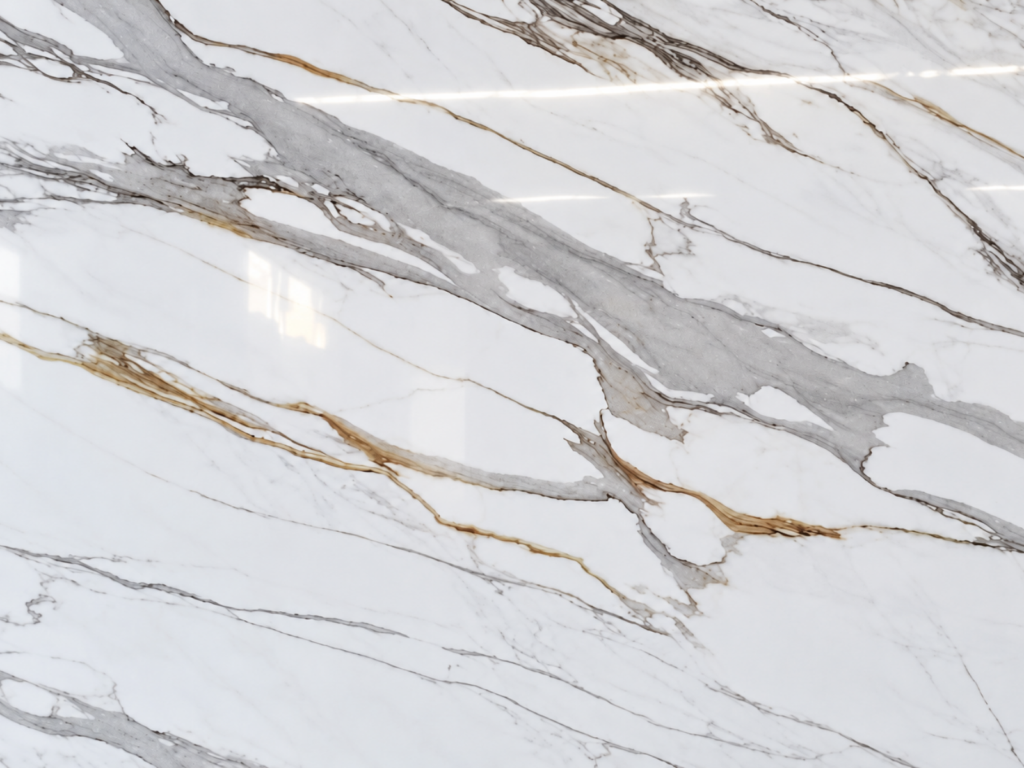
Style: White marble effect with grey and gold veining
Best suited to: Luxury kitchens, statement islands and elegant contemporary interiors

2. Viola Porcelain

Viola porcelain has a striking white base decorated with bold, contrasting veins in burgundy, brown and charcoal tones. The distinctive pattern gives the surface a dramatic marble-inspired appearance.
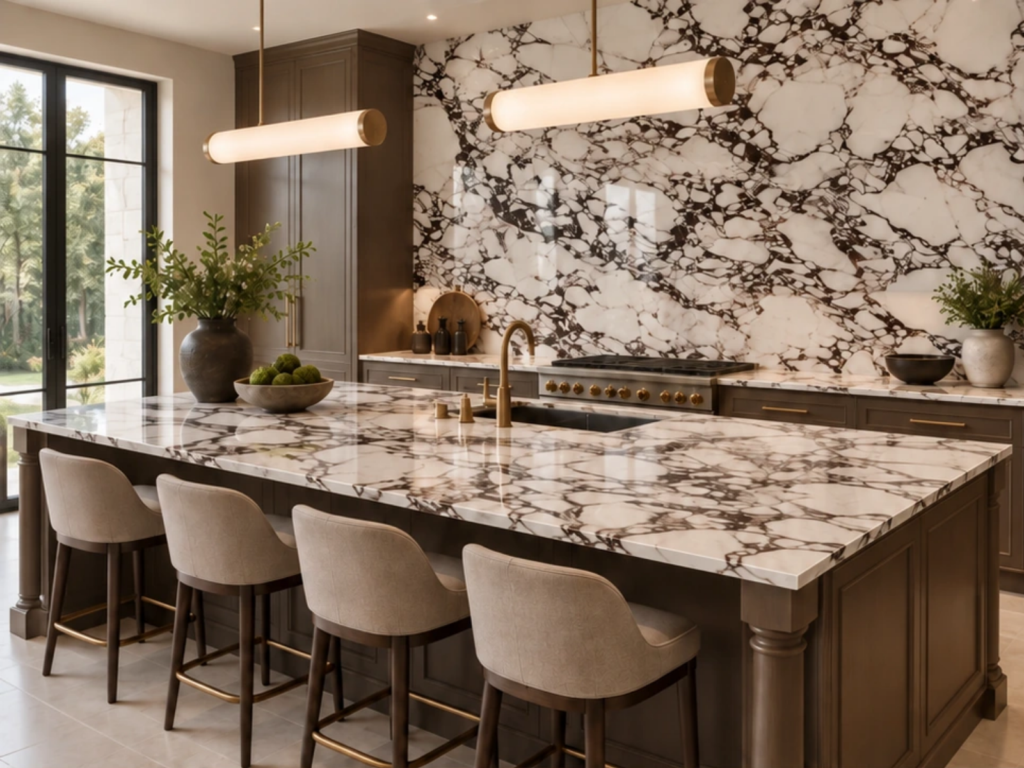
Viola Porcelain Worktop

It is a strong choice for homeowners who want their worktop to stand out rather than blend quietly into the kitchen. It can look particularly effective against neutral cabinetry and warm metallic details.

Style: White marble effect with bold burgundy, brown and dark veining
Best suited to: Feature islands, statement kitchens and dramatic splashbacks

3. Travertini Porcelain

Travertini offers a softer, more natural stone appearance, with gentle horizontal bands and warm beige, cream and light stone-grey tones. Its understated pattern creates a relaxed and welcoming feel.
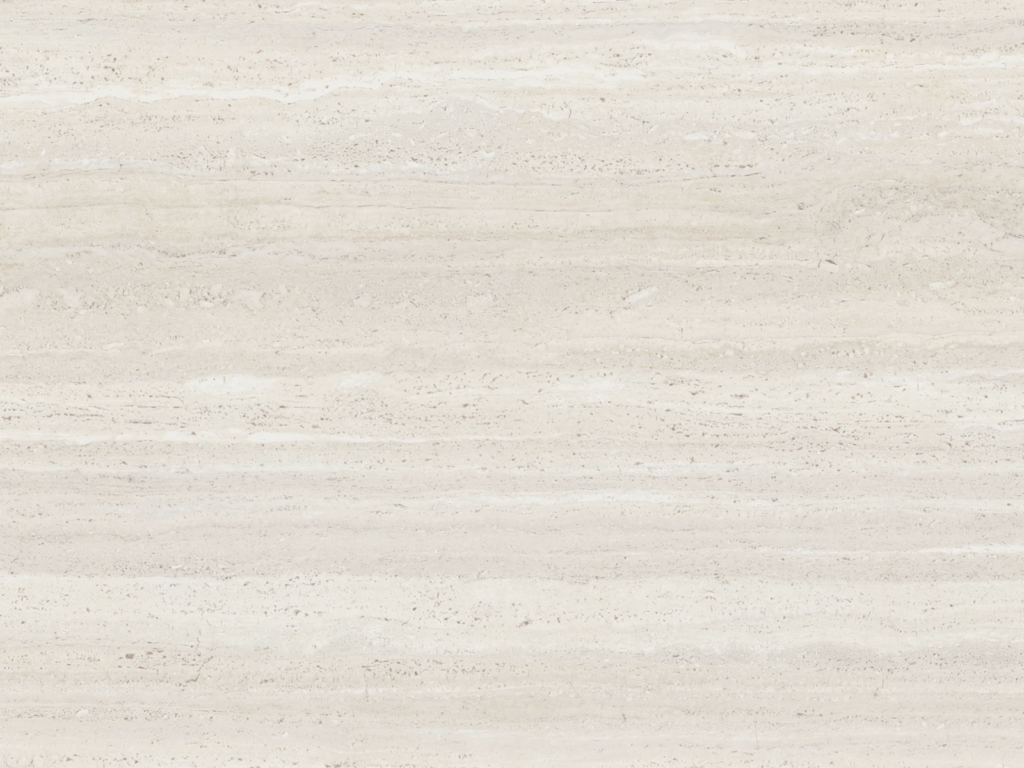
Travertini Porcelain Worktop

This design is well suited to kitchens featuring natural wood, warm neutral cabinetry and understated finishes. It is a good option if you want the appearance of natural travertine with the practical qualities of a porcelain surface.

Style: Warm beige and cream travertine-inspired stone effect
Best suited to: Natural-style kitchens, warm contemporary interiors and neutral colour schemes

4. Laurent Porcelain

Laurent porcelain combines a deep grey background with subtle golden and lighter mineral-style veining. Its darker appearance gives a kitchen a sophisticated, contemporary character.
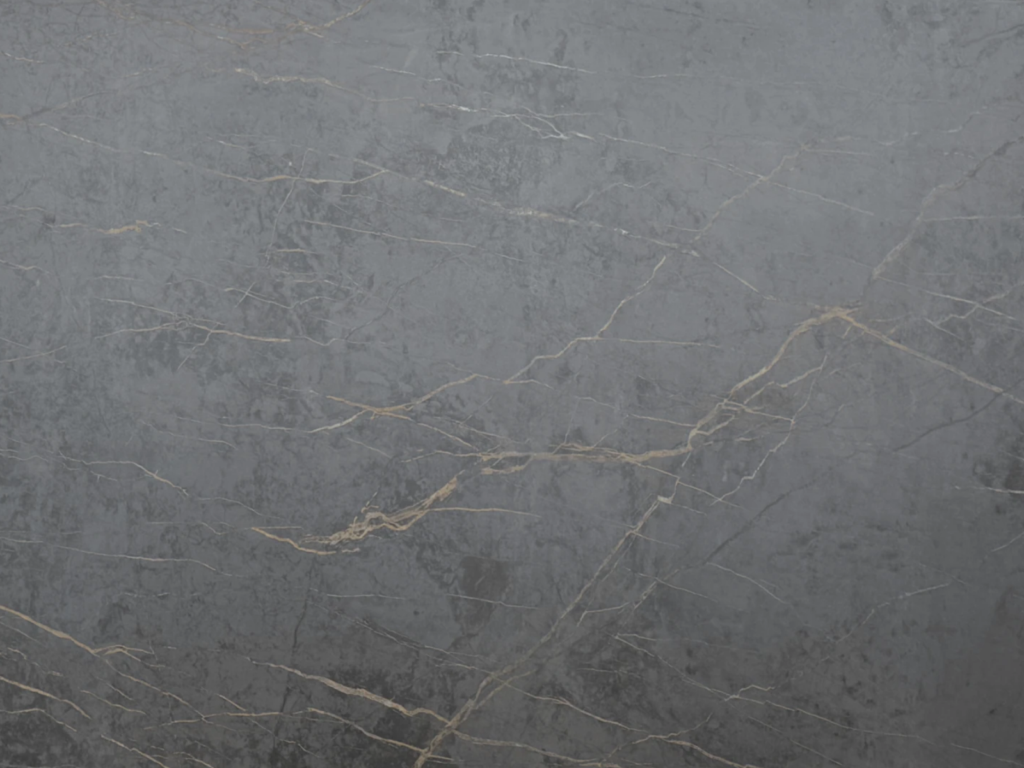
Laurent Porcelain Worktop

The contrast between the dark base and delicate veining makes it particularly suitable for kitchens with light cabinetry, dark wood finishes or carefully chosen metallic accents.

Style: Dark grey stone effect with subtle gold-toned veining
Best suited to: Contemporary kitchens, darker interiors and statement worktops

5. Cosmic Black Porcelain

Cosmic Black is a dramatic dark porcelain design with contrasting golden, bronze and lighter mineral-like patterns. The rich background and expressive details create a bold surface that can become the centrepiece of a kitchen.
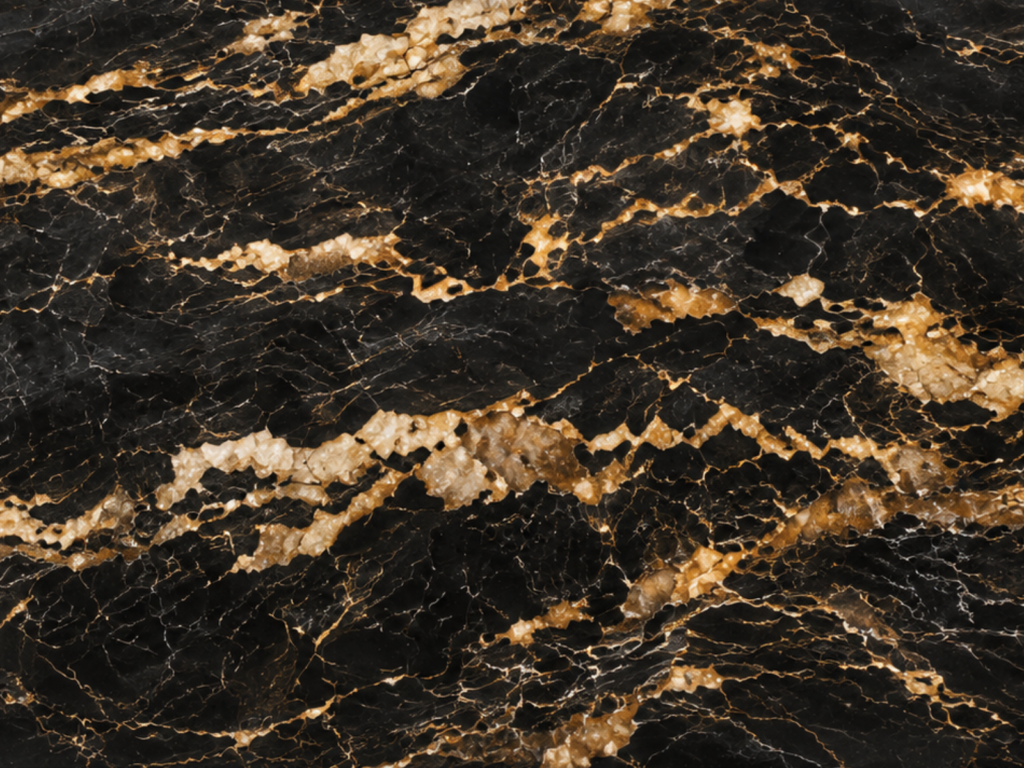
Cosmic Black Porcelain Worktop

It is particularly striking when used for a large island or paired with warm lighting, metallic fittings and contrasting cabinetry.

Style: Black marble-inspired effect with gold and bronze patterning
Best suited to: Luxury kitchen islands, bold interiors and dramatic feature surfaces

6. Sturina Porcelain

Sturina porcelain has a light white-to-grey marble-inspired appearance, with delicate grey veining running across the surface. Its balanced pattern gives the kitchen a clean, bright and sophisticated finish.
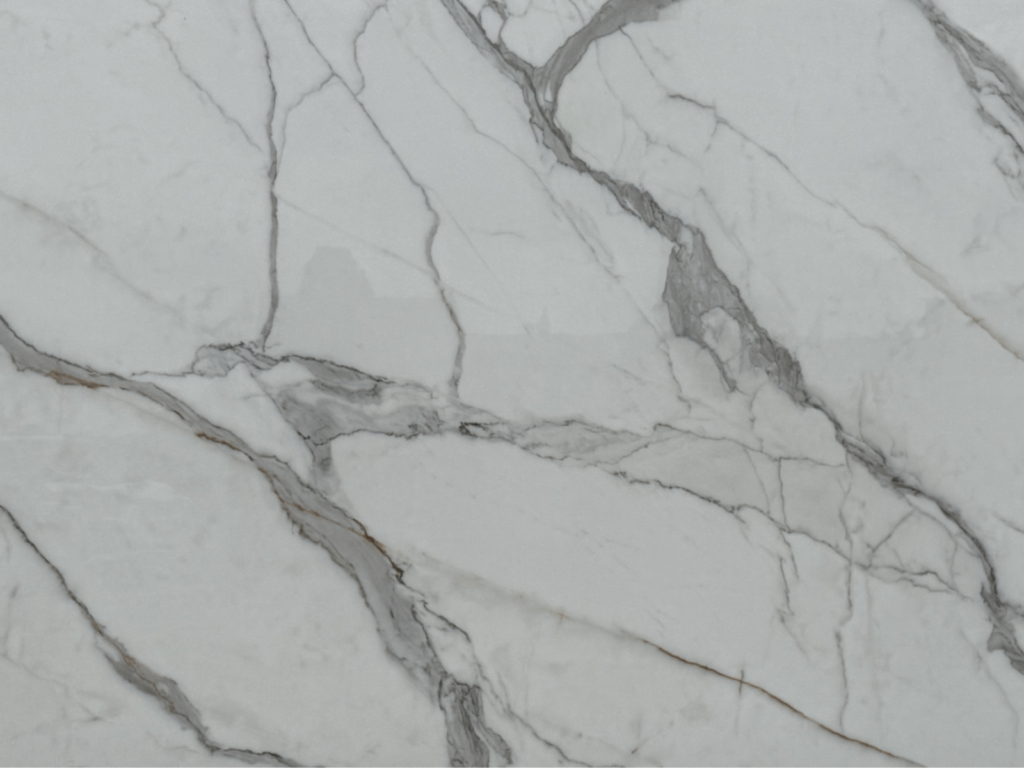
Sturina Porcelain Worktop

It is a versatile option for homeowners who like the look of marble but prefer a more understated design. It pairs well with white, taupe, beige and soft grey kitchen cabinets.

Style: Light marble effect with soft grey veining
Best suited to: Bright kitchens, minimalist interiors and timeless contemporary designs

7. Dark Porcelain Worktops

Dark porcelain worktops offer a confident, modern look for kitchens where contrast and depth are important. The dark design shown in our collection features warm brown and subtle golden details that add visual interest to the surface.
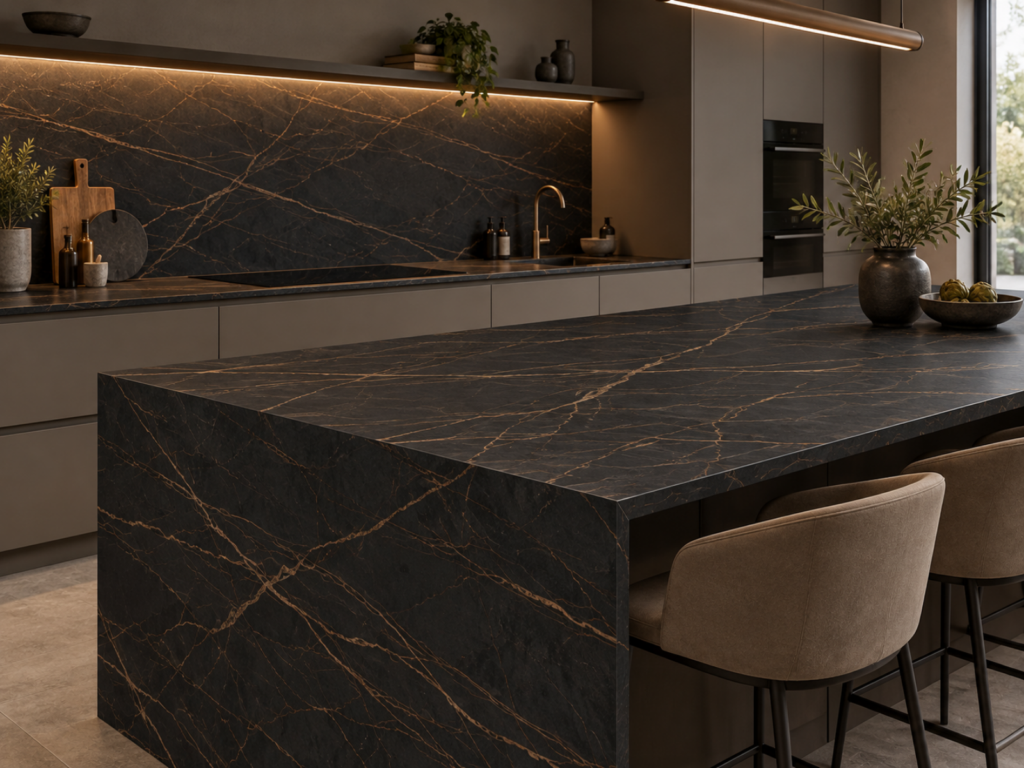
Dark Porcelin Worktop

Dark worktops can work beautifully with lighter cabinets, wood finishes and warm lighting. They are also a popular choice for islands that need to stand out from the rest of the kitchen.

Style: Dark stone effect with warm brown and golden detailing
Best suited to: Modern kitchens, contrasting cabinetry and statement islands

8. Monte Bianco Porcelain

Monte Bianco features a light, elegant background with fine grey veining. Its understated marble-inspired pattern gives the surface a refined appearance without overwhelming the rest of the kitchen design.
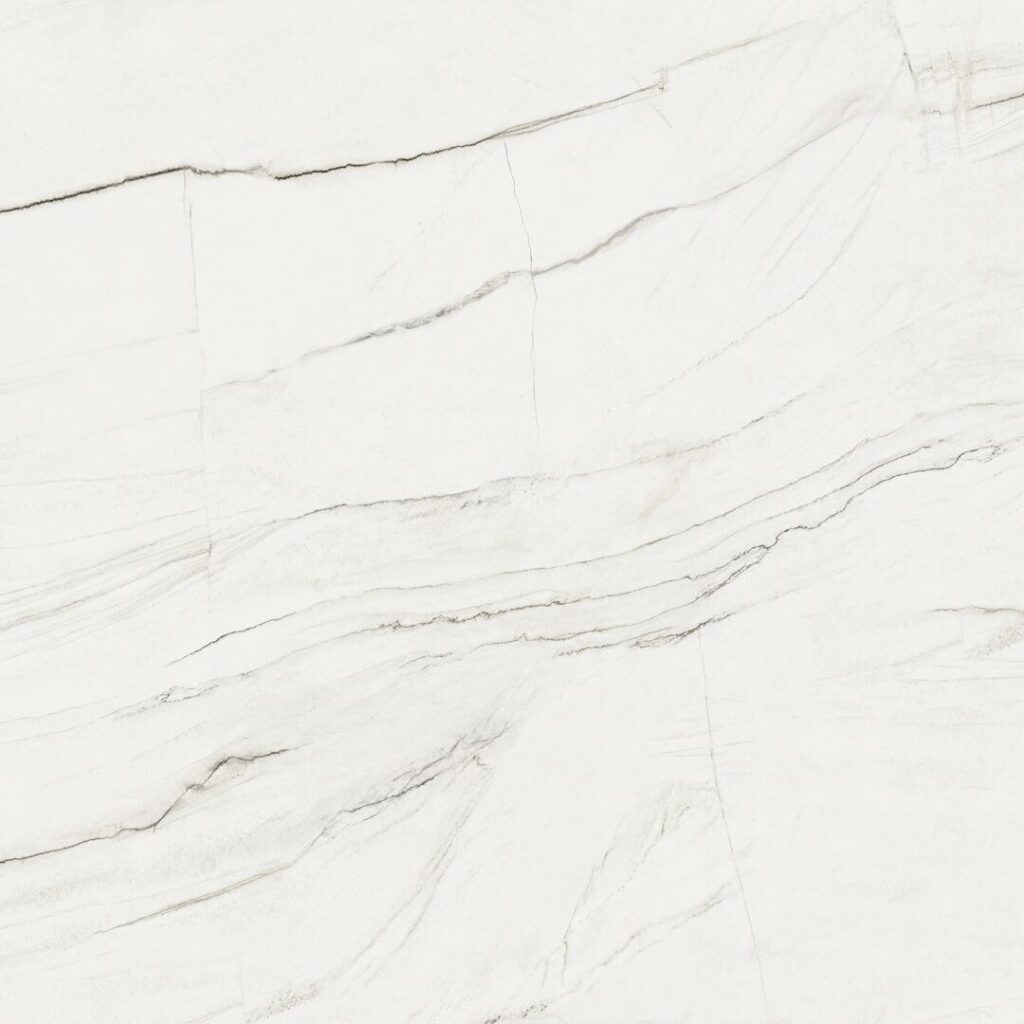
Monte Bianco Porcelain

It is a suitable choice for homeowners who prefer a bright worktop with subtle movement rather than strong, dramatic veins. It can complement both traditional and contemporary kitchen styles.

Style: Light marble effect with fine grey veining
Best suited to: Bright kitchens, understated luxury and neutral interiors

9. Caravaggio Gold Porcelain

Caravaggio Gold is a bold dark porcelain design with contrasting gold and lighter mineral-style veins. Its dramatic pattern creates a luxurious look, particularly when used across a kitchen island or as a feature worktop.

The dark background works well with cream, beige, white and warm wood cabinetry. It is worth considering if you want a more distinctive alternative to a traditional light marble-effect surface.

Style: Dark marble effect with striking gold and lighter veining
Best suited to: Luxury kitchens, feature islands and high-contrast interiors

10. Arabescato Porcelain

Arabescato porcelain features a light background with flowing grey marble-inspired veins. Its balanced pattern creates a classic stone appearance that suits a wide range of kitchen designs.

It is a versatile option for homeowners who want the elegance of marble-inspired worktops without choosing an overly bold pattern. It can be paired with white, grey, navy and natural wood cabinetry.

Style: White marble effect with flowing grey veining
Best suited to: Classic kitchens, modern interiors and elegant kitchen islands

Which Porcelain Worktop Colour Should You Choose?

The best design depends on the overall look you want to achieve in your kitchen.

Your preferred kitchen styleDesigns to consider
Bright and elegantBorghini Gold, Sturina, Monte Bianco
Bold marble-inspired designViola, Arabescato
Warm and naturalTravertini
Dark and dramaticLaurent, Cosmic Black, Caravaggio Gold
Modern statement kitchenCosmic Black, Viola, Dark Porcelain

These are design suggestions rather than fixed rules. The best way to choose is to compare the actual porcelain samples with your kitchen cabinets, flooring, lighting and other finishes.

Not sure which porcelain design is right for your kitchen?

Explore the Stone Cut porcelain collection and speak to our team about the available colours, slab options and finishes. We can help you consider the right design for your kitchen layout and budget.

Request a porcelain worktop quote from Stone Cut today.

Are Porcelain Worktops Worth the Money?

Porcelain can be an excellent choice for homeowners who want a modern, low-maintenance kitchen surface with a wide choice of colours and finishes.

However, it is important to understand both its advantages and limitations before making a decision.

Benefits of porcelain worktops

Good heat resistance

Porcelain generally offers very good heat resistance compared with many common kitchen worktop materials. However, follow the manufacturer’s instructions and avoid assuming that every product can withstand every temperature or sudden temperature change.

Non-porous surface

Porcelain is generally non-porous, making it resistant to everyday staining and easy to clean. It normally does not require the routine sealing associated with some natural stones.

Wide range of designs

You can choose from plain colours, stone-inspired patterns, marble effects and contemporary finishes.

UV resistance

Many porcelain products offer good resistance to UV exposure, making them suitable for areas with natural light. Check the specific manufacturer’s product guidance.

Easy everyday cleaning

For routine cleaning, a soft cloth and suitable cleaning product are generally sufficient. Always follow the manufacturer’s care instructions.

Things to consider before buying

Porcelain is not completely immune to damage.

Its edges and corners can chip if struck by heavy or hard objects. Fabrication and installation require specialist knowledge and suitable equipment.

It is also important to choose a product that suits your kitchen design and intended use.

If your budget is limited, quartz or granite may be worth considering alongside porcelain.

The best worktop is the one that suits your kitchen, your budget and the way you use the space.

Porcelain Worktop Prices in London and West London

If you are looking for porcelain worktops in London, the final price will depend on the selected material, kitchen measurements, fabrication requirements and installation arrangements.

Access, parking, delivery and the location of the property can also influence the quotation.

Stone Cut is based at:

Unit 5, 220 Uxbridge Road, Southall, UB1 3DZ

From our Southall workshop, we serve customers across West London and surrounding areas, subject to project requirements.

Areas include:

  • Southall

  • Ealing

  • Greenford

  • Hayes

  • Hanwell

  • Hounslow

  • Acton

  • Northolt

  • Uxbridge

  • Wembley

  • Harrow

  • Hillingdon

  • Hammersmith

If you are based elsewhere in London, contact us to check availability for your project.

Whether you are planning a straightforward kitchen replacement or a large island with a waterfall edge, we can discuss the design, material and fabrication requirements.

See our areas we cover page for more information.

What Should Be Included in a Porcelain Worktop Quote?

Before choosing a supplier, make sure you understand exactly what the quotation covers.

A clear quotation should identify the material and explain the services included.

Use this checklist when comparing prices:

  • Manufacturer and porcelain range

  • Colour and finish

  • Slab thickness

  • Worktop measurements

  • Estimated slab requirements

  • Templating and measurement

  • Fabrication and edge finishing

  • Sink and hob cut-outs

  • Tap holes and drainer grooves, where required

  • Joins and seam positioning

  • Upstands and splashbacks

  • Delivery

  • Installation

  • Removal and disposal of existing worktops, if required

  • VAT inclusion or exclusion

  • Warranty details and exclusions

A low headline price may not include every service. An itemised quotation makes it easier to understand the full project cost and avoid unexpected extras.

How Can You Reduce the Cost of Porcelain Worktops?

You do not necessarily need to compromise on the overall appearance of your kitchen to manage your worktop budget.

A few practical design decisions can help control fabrication and material costs.

Choose your porcelain design carefully

Different colours and collections can have different prices. Ask about suitable alternatives if you have a particular look in mind but want to stay within a budget.

Plan the kitchen layout efficiently

The position of worktop sections, joins and cut-outs can influence how the slabs are used. Good material planning may help reduce unnecessary waste.

Keep edge details practical

A simple edge can create a clean, modern finish without the additional fabrication involved in more complex designs.

Consider your island design

A large island with a waterfall edge can be a striking feature, but it requires additional material and fabrication. Compare the appearance and cost of different island finishes before making a decision.

Plan cut-outs before fabrication

Confirm your sink, hob and tap specifications before templating. Changes made after fabrication can be difficult or costly.

Request an itemised quotation

Ask your fabricator to explain the costs of material, templating, fabrication, cut-outs, delivery and installation. This helps you understand where your budget is going.

How Does the Stone Cut Porcelain Worktop Process Work?

Choosing a worktop is only one part of the project. Accurate measurement, fabrication and fitting are just as important.

At Stone Cut, the process can be discussed with you before the work begins.

Step 1: Discuss your kitchen and design

Tell us about your kitchen layout, preferred porcelain colour, worktop dimensions and any features such as an island, undermount sink or waterfall edge.

Step 2: Choose your porcelain

Explore available colours and finishes. We can discuss the options that suit your design and budget.

Step 3: Templating and measurement

Accurate measurements are required before fabrication. The templating stage establishes the dimensions and positions of important features such as sinks, hobs and joins.

Step 4: Workshop fabrication

The approved measurements are used to prepare the porcelain sections. Cutting, shaping and edge finishing are carried out according to the agreed specification.

Step 5: Delivery and installation

The finished sections are delivered and installed according to the project arrangements. The worktop is positioned, aligned and finished to complete the kitchen.

Frequently Asked Questions About Porcelain Worktop Costs

1. How much do porcelain worktops cost in the UK?

The price depends on the porcelain range, slab thickness, kitchen measurements and fabrication requirements. Stone Cut’s porcelain worktop price is [Stone Cut Price]. Contact us with your kitchen dimensions and preferred design for a project-specific quotation.

2. What is the average porcelain worktop price per m²?

The price per square metre varies between manufacturers, colours, thicknesses and suppliers. Stone Cut’s current price is [Stone Cut Price per m²]. Check whether the rate includes templating, fabrication, delivery, fitting and VAT before comparing it with another quotation.

3. How much do porcelain worktops cost per linear metre?

A linear-metre price depends on the depth of the worktop. For a standard 600mm-deep worktop, one linear metre represents 0.6m² of surface. Stone Cut’s price is [Stone Cut Price per linear metre], subject to the agreed specification and inclusions.

4. Are porcelain worktops more expensive than quartz?

Porcelain is often positioned in the premium worktop category, but the difference depends on the specific products being compared. Brand, colour, thickness, fabrication and installation can all influence the final price. Request quotations based on the same measurements and specification for a fair comparison.

5. Are porcelain worktops more expensive than granite?

Not always. Granite prices vary according to the type of stone, slab availability and finish. Porcelain prices also vary by brand and design. The best way to compare them is to look at the actual slabs and the complete supplied-and-fitted quotation.

6. Are Dekton and porcelain the same?

No. Dekton is a branded ultra-compact surface by Cosentino, while porcelain is a material category. Both are used for premium worktops, but their composition, manufacturing methods and product specifications should not automatically be treated as identical.

7. Is Neolith a type of porcelain?

Neolith is a branded sintered stone surface. It belongs to the wider category of engineered mineral surfaces used for worktops. Always check the manufacturer’s technical information for the exact product you are considering.

8. Does porcelain worktop thickness affect the price?

Yes, thickness can influence material cost, fabrication and the finished design. Options such as 12mm and 20mm may be available depending on the product range. Ask your fabricator which thicknesses are suitable for your chosen design.

9. Do porcelain worktops need sealing?

Porcelain worktops are generally non-porous and do not require routine sealing like some natural stones. Follow the manufacturer’s care instructions for your specific product and use suitable cleaning products.

10. Do porcelain worktops chip or crack?

Porcelain has a hard, durable surface, but its edges and corners can chip if struck by heavy or hard objects. Careful fabrication, suitable edge design and professional installation help reduce the risk of damage.

11. Can you put hot pans directly on porcelain worktops?

Porcelain generally has very good heat resistance, but the exact performance depends on the product. Follow the manufacturer’s guidance and use sensible kitchen precautions rather than assuming that every surface is immune to thermal damage.

12. How much do porcelain sink and hob cut-outs cost?

The cost depends on the number and type of cut-outs and the fabrication involved. An undermount sink, for example, may require different edge finishing from a standard sink installation. Stone Cut’s price for the required cut-outs is [Stone Cut Price].

13. Does a porcelain waterfall island cost more?

A waterfall island requires additional material and fabrication because the worktop continues down the side of the island. The final cost depends on the island dimensions, edge details, slab layout and installation requirements.

14. How long does it take to install porcelain worktops?

The project involves measurement, templating, workshop fabrication and installation. The time between the initial enquiry and fitting depends on the chosen slab, project specification and workshop schedule. Stone Cut’s confirmed lead time is [Stone Cut Lead Time].

15. Can I install porcelain worktops myself?

Professional installation is strongly recommended. Porcelain slabs can be large and heavy, and they require specialist handling, cutting and fitting. Incorrect handling can damage the material or create an unsafe installation.

16. Can I get a free porcelain worktop quote from Stone Cut?

Yes. Contact Stone Cut to discuss your kitchen, preferred porcelain design and measurements. We can advise on the next steps and provide a quotation based on your project requirements. [Confirm whether free quotations and samples are currently available.]

Get a Porcelain Worktop Quote from Stone Cut

A well-chosen porcelain worktop can transform the appearance of your kitchen, from a simple straight run to a statement island with a waterfall edge.

The important thing is to choose the right material, understand the fabrication requirements and compare complete quotations rather than headline prices alone.

At Stone Cut, we supply, fabricate and install bespoke worktops from our Southall workshop, serving customers across West London and surrounding areas.

Whether you are renovating your kitchen or planning a completely new design, get in touch to discuss your porcelain worktop requirements.

Request your porcelain worktop quote today.

  • Phone: 020 8571 3171

  • Email: sales@stonecut.co.uk

  • Address: Unit 5, 220 Uxbridge Road, Southall, UB1 3DZ

Explore our porcelain worktops or contact Stone Cut to discuss your project.

Please fill in the below form for samples