

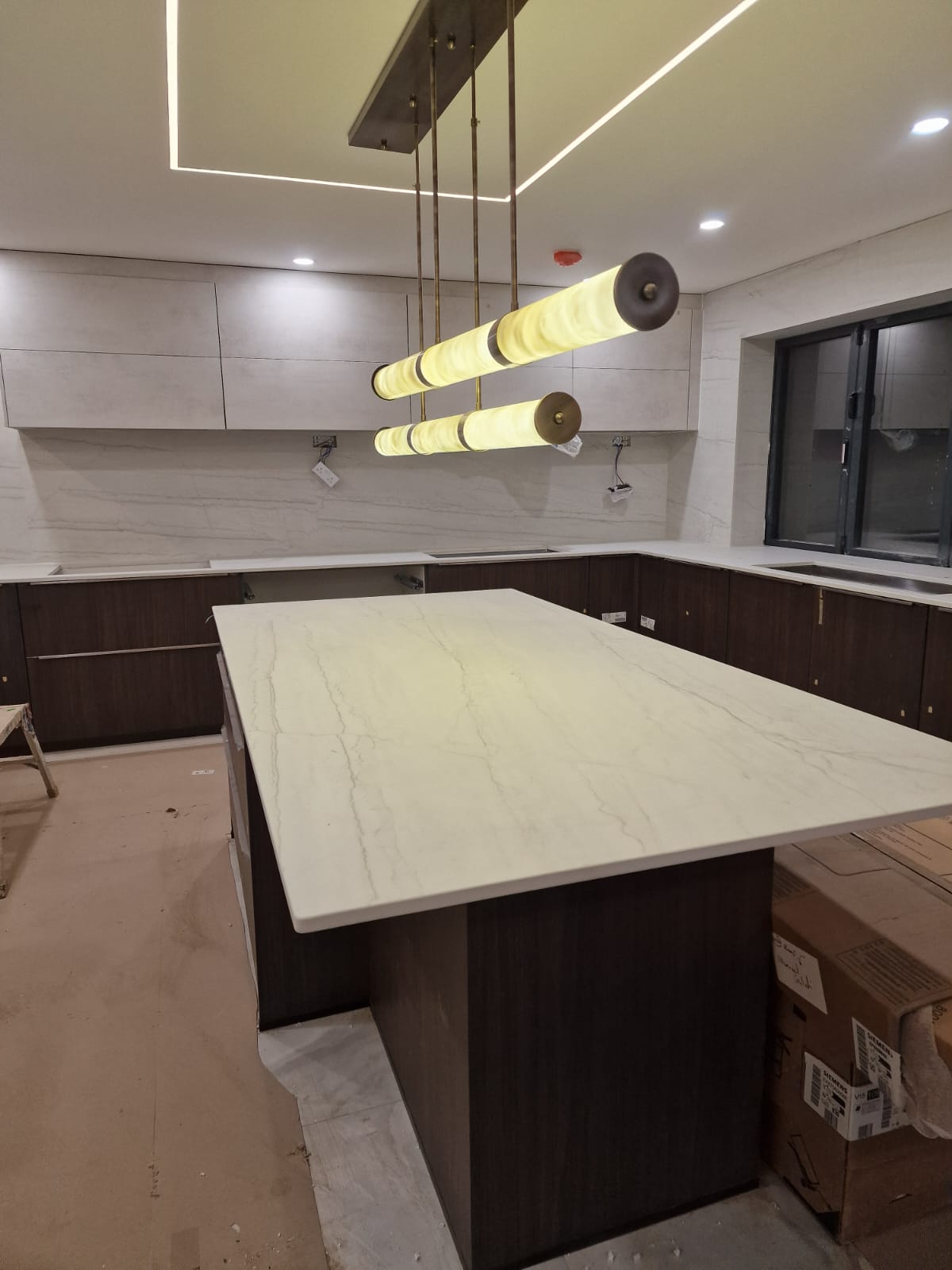
10 Tips for Choosing the Right Kitchen Worktop
Choosing the right kitchen worktop is one of the most important decisions when designing or renovating a kitchen. Your chosen surface affects the appearance, durability, maintenance and everyday functionality of the space.
With materials including quartz, granite, marble, porcelain and solid surfaces available, it can be difficult to know which option suits your kitchen. These ten practical tips will help you compare the choices and find a worktop that fits your lifestyle, design and budget.
1. Consider How You Use Your Kitchen
Start by thinking about how much use your worktops receive.
For a busy family kitchen or a space used for daily cooking, durability and easy maintenance should be priorities. Quartz and porcelain are excellent options because they are non-porous and simple to clean.
Granite is another strong choice for active kitchens, particularly when natural beauty and heat resistance are important. Marble offers a luxurious appearance and a naturally cool surface that works particularly well for baking, but it requires more careful maintenance.
Choosing a material that suits your daily routine will help you enjoy your worktops for many years.
2. Understand the Main Worktop Materials
Each worktop material has its own appearance, performance and maintenance requirements.
Quartz worktops
Quartz is an engineered stone made using natural quartz minerals, resins and pigments. It is durable, non-porous and available in a wide selection of colours and patterns. Its consistent appearance makes it suitable for both contemporary and traditional kitchens.
Granite worktops
Granite is a natural stone, meaning every slab has its own pattern, colour variation and character. It is exceptionally strong and heat resistant, although periodic sealing may be required to help prevent staining.
Marble worktops
Marble is recognised for its distinctive veining and elegant appearance. It can create a luxurious feature in a kitchen, but it is more porous and susceptible to staining, scratching and etching than quartz or granite.
Porcelain worktops
Porcelain is highly resistant to heat, stains, scratches and UV exposure. It is available in designs that replicate natural stone, concrete and other materials. Porcelain is particularly suitable for modern kitchens and areas exposed to strong sunlight.
Solid-surface worktops
Solid-surface materials such as Corian offer smooth designs and discreet joins. They are available in numerous colours and can often be repaired if scratched. However, they generally have lower heat resistance than stone and porcelain surfaces.
3. Compare Durability and Maintenance
Consider how much maintenance you are prepared to undertake.
Quartz is non-porous and does not normally require sealing. It can be cleaned with warm water, mild detergent and a soft cloth.
Granite is strong and heat-resistant, but some varieties require periodic sealing. Marble needs more regular care because acidic liquids such as lemon juice, vinegar and wine can mark its surface.
Porcelain requires very little maintenance and performs well against heat, stains and scratches. Solid-surface worktops are easy to clean, although care must be taken with hot cookware.
No worktop is completely indestructible. Using chopping boards and trivets will help protect any material.
4. Set a Realistic Budget
Worktop prices vary depending on the material, brand, colour, slab availability and complexity of fabrication.
Your quotation should account for more than the stone itself. Sink and hob cut-outs, drainage grooves, edge profiles, upstands, splashbacks, templating, fabrication and installation can all affect the final price.
Rare granite and marble slabs can be more expensive, while quartz and porcelain prices vary considerably between collections. Some readily available granite and quartz options can provide excellent value.
Request a detailed worktop quote based on your kitchen measurements so you can compare the complete installed cost.
5. Match the Worktop to Your Kitchen Style
Your worktops should complement your cabinets, flooring, walls and overall kitchen design.
White or lightly veined quartz can make a small kitchen feel brighter and more spacious. Dark granite or quartz can create contrast against pale cabinets, while warm beige and cream surfaces pair naturally with wood finishes.
Marble-effect quartz works well in both shaker and handleless kitchens. Concrete-inspired quartz or porcelain can complement contemporary and industrial designs, while richly patterned granite adds character to traditional spaces.
Try to select a surface that supports the overall design rather than competing with every other feature.
6. Examine Colours and Patterns in Person
Colours can appear very different on a screen, in a small sample and across a complete slab.
Quartz normally offers greater consistency between samples and finished worktops. Granite and marble are natural materials, so their veining, markings and colour variations may differ considerably between slabs.
Whenever possible, view a large sample or the full slab before making your final selection. Place samples beside your cabinet doors, flooring and splashback materials and check them under both natural and artificial light.
This is particularly important for heavily veined or dramatically patterned stones.
7. Choose the Right Thickness and Edge Profile
Stone worktops are commonly supplied in 20mm or 30mm thicknesses.
A 20mm worktop creates a slimmer, contemporary appearance and works particularly well with handleless cabinetry. A 30mm worktop has a more substantial look and is popular in traditional and classic kitchens.
The edge profile also influences the finished design. Common options include:
- Pencil-round edges
- Bevelled edges
- Bullnose edges
- Ogee edges
- Shark-nose edges
Simple edges usually suit modern kitchens, while decorative profiles such as ogee edges can complement traditional cabinetry. Your fabricator can explain which profiles are suitable for your chosen material and thickness.
8. Check Heat, Stain and Scratch Resistance
Different materials perform differently under everyday kitchen conditions.
Granite and porcelain offer excellent heat resistance, although using a trivet is still advisable. Quartz is stain resistant and highly durable, but placing very hot cookware directly on the surface can damage the resin within the material.
Marble is naturally heat resistant but can scratch, stain or etch more easily. Solid-surface worktops can also be affected by excessive heat.
If low maintenance is your main concern, quartz or porcelain may be the most practical option. If natural variation and heat resistance are more important, granite could be a better fit.
9. Plan the Sink, Hob, Splashbacks and Joints
Your worktop should be planned as part of the entire kitchen rather than as an isolated surface.
Consider whether you want an undermount or inset sink, drainage grooves, a matching splashback, upstands or a waterfall end for the island. Hob and sink positions can influence where joints are placed and how the slabs are fabricated.
Matching stone splashbacks can create a coordinated appearance and make the walls easier to clean. In kitchens with strongly veined materials, careful slab planning can also help the pattern flow naturally between worktops, splashbacks and waterfall ends.
Accurate professional templating is essential to ensure every cut-out, joint and finished edge fits correctly.
10. Choose an Experienced Worktop Fabricator
Even premium materials can produce disappointing results if they are measured, fabricated or installed poorly.
Choose a company that provides:
- Accurate professional templating
- Modern stone-fabrication machinery
- Experienced stonemasons and installers
- Clear quotations and lead times
- Access to reliable stone suppliers
- Advice on samples, colours and finishes
- Suitable guarantees
At StoneCut, we supply, template, fabricate and install bespoke quartz, granite, marble, porcelain and other premium worktops across London and surrounding areas. Our team can help you compare materials, understand the costs and select a surface suited to your kitchen.
Find the Right Worktop for Your Kitchen
The right kitchen worktop should balance appearance, performance, maintenance and cost. Quartz offers consistency and easy care, granite provides natural character and strength, marble creates timeless luxury, and porcelain delivers excellent heat and scratch resistance.
Consider how you use your kitchen, view samples in the actual space and obtain a complete quotation before making your decision.
Browse our kitchen worktops or contact StoneCut for expert advice and a free quotation.
